Before the First Combined Surgery: What Must Be Validated?
A combined phaco-vitrectomy procedure is not secured at the moment of incision. Platform configuration, consumables, workflow and team coordination must be validated together before the first operating list.
В этой статье
- 1. Start with the surgical scenario, not the function catalogue
- 2. Verify the actual platform configuration before opening the room
- 3. Fluidics: connect the setting with the expected behaviour
- 4. Consumables and instruments: material continuity is part of the protocol
- 5. Foot pedal, illumination and interface: match control with practice
- 6. Train the team on the shared protocol, not only on the machine
- 7. Structure validation across three phases
- 8. Define the go-ahead before the first operating list
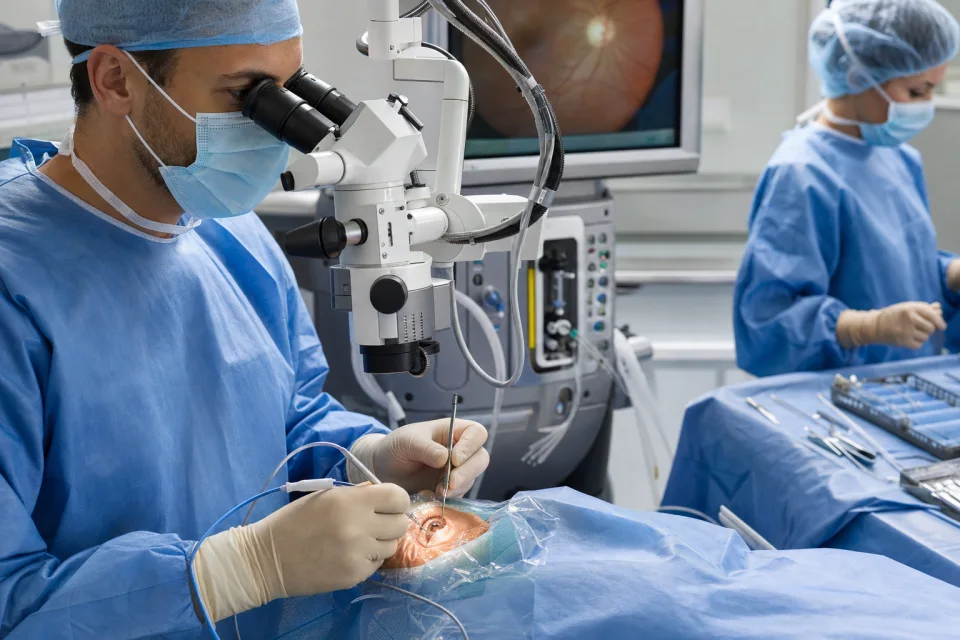
A combined phaco-vitrectomy procedure brings together requirements that cannot be managed simply by adding a cataract configuration to a vitreoretinal configuration. The transition between sequences, the availability of accessories, the control logic and the team’s shared understanding of the protocol all influence the continuity of the surgical workflow. Before the first operating list, the objective is therefore not merely to switch on the equipment. The entire system must be shown to be coherent with the planned procedure.
1. Start with the surgical scenario, not the function catalogue
The first validation should be clinical and organizational. The team defines the exact sequence of the procedure: which phase will come first, when the platform will change its operating logic, which instruments will be introduced and which steps will require particular coordination. This description then becomes the template for the technical configuration. It prevents a common error: selecting isolated functions without checking how they will actually be linked in the operating room.
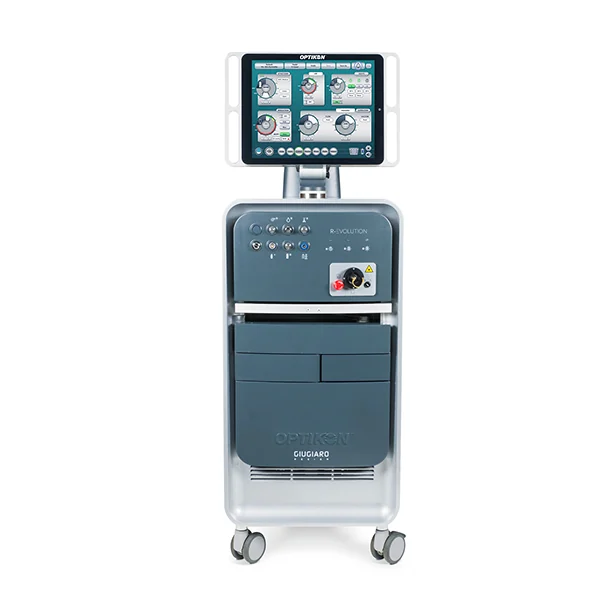
The R-Evolution CR is particularly relevant to this approach. BVI Medical states that the platform provides options for each stage of cataract, vitreoretinal or combined procedures. Its interest is not simply that two procedural capabilities are available within the same system. The practical value lies in the possibility of preparing a working architecture around continuity of the intervention. This becomes meaningful when the surgeon and team find a control and preparation logic that is compatible with the selected protocol.
2. Verify the actual platform configuration before opening the room
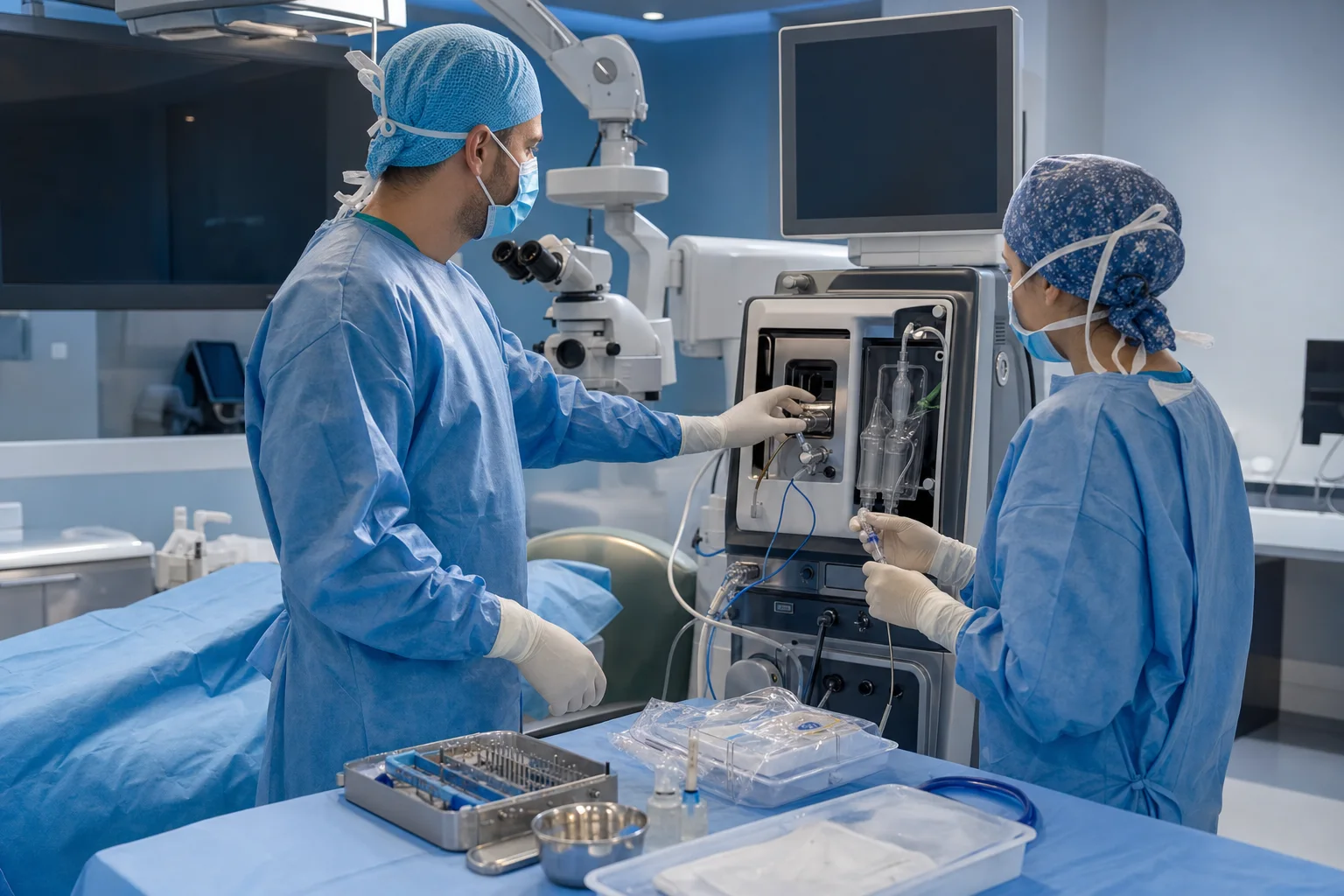
A platform intended for combined surgery must be checked according to the configuration that will actually be used, rather than its theoretical capabilities. The checklist should identify the available functions, the functions that are activated, the associated accessories and the sequence in which they will be used. This turns technical capability into an operating system that the team can genuinely deploy.
First-line technical validation
- Confirm the programme or configuration selected for the phacoemulsification sequence.
- Confirm the planned vitrectomy configuration and its associated accessories.
- Check the presence, identification and integrity of the consumables required for each phase.
- Test the foot-pedal logic and establish a common understanding of its controls.
- Check the illumination and the elements required for visualization of the operative field.
- Rehearse the transition between sequences with the complete team.
- Record who is responsible for each check and what action is required if a discrepancy is found.
3. Fluidics: connect the setting with the expected behaviour
Fluidics should not be treated as an abstract checklist category. It must be connected to the behaviour expected at each stage: field stability, aspiration control, exchange management and continuity of the surgical manoeuvre. The correct reasoning begins with the surgeon’s protocol, then confirms that compatible lines, cassettes, tubing and consumables are available and correctly installed for the relevant sequence.
This feature–mechanism–consequence chain is central. When the fluidics configuration is properly prepared, the team can recover the expected behaviour of the platform. That predictability reduces interruptions and limits improvised decisions during surgery. In a combined procedure, where the operative context changes between the anterior and vitreoretinal phases, preparation must therefore include the logic for moving from one operating environment to the other.
4. Consumables and instruments: material continuity is part of the protocol
Having a consumable available is not enough. Its suitability for the selected configuration, its position within the preparation circuit and the precise moment of use must all be confirmed. The scrub nurse should be able to distinguish what belongs to the cataract phase, the vitreoretinal phase and the transition between them. This organization reduces searching at critical moments and allows the surgeon to keep attention on the procedure.
BVI Medical states that it offers a range of accessories, single-use instruments and customized procedure packs for ophthalmic surgery. Its portfolio includes instruments associated with the Malosa, Beaver, Vitreq and Visitec brands. For an operating team, the value of a structured portfolio is operational: it supports a coherent preparation around the protocol, while final selection remains dependent on the chosen configuration, the surgeon’s practice and availability validated by the facility.
5. Foot pedal, illumination and interface: match control with practice
The foot pedal is a coordination tool, not a secondary accessory. Its logic must be understood by the surgeon and known by the team, particularly when the nature of the surgical sequence changes. Before the first list, a dry run should confirm the relevant controls, their interpretation and the point at which they are used in the protocol. The aim is to prevent a control or parameter question from emerging during a phase that demands maximum attention.
Illumination must be integrated into the same logic. Its preparation depends on the visualization required, the accessories being used and the operative phase. The team must know where the necessary elements are located, who prepares them and how the transition is announced. The technology becomes genuinely useful when it does more than accumulate functions: it organizes the interaction between interface, foot pedal, illumination, fluidics and consumables around an explicit sequence.
6. Train the team on the shared protocol, not only on the machine
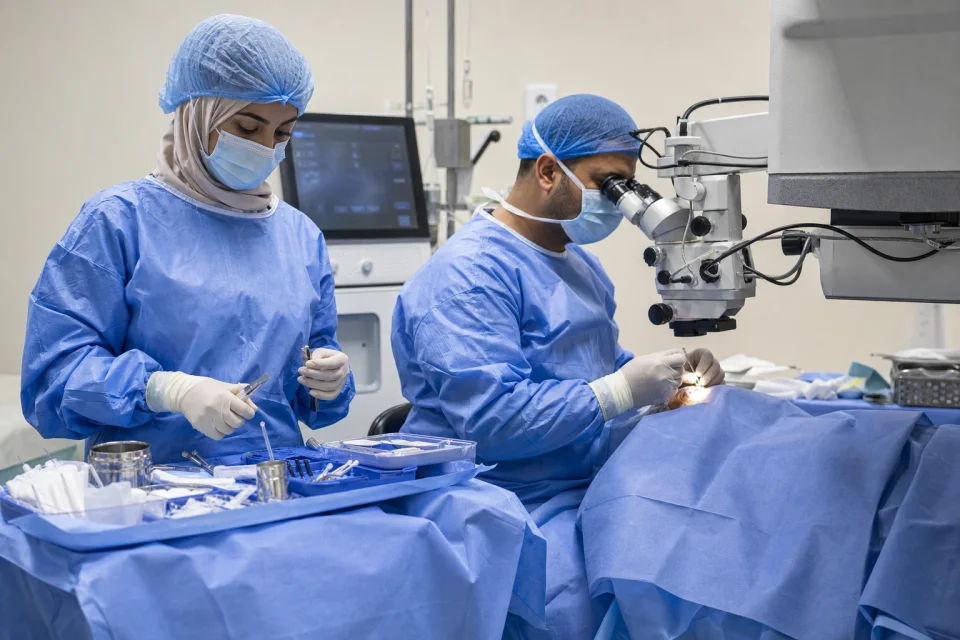
Effective training is contextual rehearsal. The surgeon validates the control logic and usable settings; the scrub nurse validates the availability and presentation order of instruments; the operating-room assistant validates connections, consumables and transition steps. Each person should know what is expected before, during and after the change of phase. This approach turns a technical demonstration into collective competence.
7. Structure validation across three phases
The WHO structures quality in cataract surgery around three phases: preoperative, intraoperative and postoperative. This framework is useful for combined surgery because it prevents preparation from being reduced to a technical check immediately before incision. The preoperative phase covers case selection, equipment availability and team preparation; the intraoperative phase checks the coherence of the procedure and the team’s ability to manage transitions; the postoperative phase documents discrepancies and supports improvement of the next operating list.
The WHO also presents these recommendations as applicable to the planning and implementation of cataract-surgery services at facility level. For ASEM, this perspective is decisive: validating a platform is not merely an installation step, but part of service organization. The process should leave a usable record, be repeatable and be transferable to every new member of the team.
8. Define the go-ahead before the first operating list
The go-ahead can be given when four conditions are met: the platform configuration matches the protocol; the required consumables and instruments are present and identified; every team member understands their role; and the transition between phases has been rehearsed without ambiguity. If one of these elements remains uncertain, the technical demonstration should continue before the first procedure is scheduled.
Поделиться статьёй
Профессиональные вопросы и ответы
Why validate the platform before the first combined procedure?
Combined surgery brings together several technical sequences and different operating habits. Prior validation aligns the configuration, consumables, controls and team responsibilities with the planned surgical workflow.
Which elements should be checked first?
The platform configuration, available consumables, instruments, fluidics, illumination, foot pedal, usable settings and coordination between the surgeon, scrub nurse and operating-room assistant should all be checked.
Is the R-Evolution CR suitable for combined procedures?
BVI Medical states that the R-Evolution CR provides options for each stage of cataract, vitreoretinal or combined procedures. The selected configuration must then be adapted to the surgical protocol and accessories available in the operating room.
Источники и справочные материалы
Institutional Source
-
BVI Medical – R-Evolution® CR
BVI Medical · R-Evolution CR · www.bvimedical.com
Просмотрено 2026-10-01 -
Blindness and vision impairment
BVI Medical · R-Evolution CR · www.who.int
Просмотрено 2026-08-09 -
Summary of recommendations for quality of care in cataract surgery management
BVI Medical · R-Evolution CR · www.who.int
Просмотрено 2026-08-09
Официальный каталог
-
BVI ophthalmic consumables
BVI Medical · www.bvimedical.com
Просмотрено 2026-10-01
Мероприятия по этой теме

26th Euretina Congress
Vienne, АвстрияEURETINA
A professional ophthalmology event organised by EURETINA. Please consult the official source for the lates...
Vision to Venture Weekend 1
Budapest, ВенгрияEuropean Society of Cataract and Refractive Surgeons
A professional ophthalmology event organised by European Society of Cataract and Refractive Surgeons. Plea...
15e Congrès ARMD — Rétine et révolutions
Antibes Juan-les-Pins, ФранцияAssociation Rétine Macula Dégénérescences
A professional ophthalmology event organised by Association Rétine Macula Dégénérescences. Please consult...