Plasma Technology in Oculoplasty: Which Procedures Can Plexr Pro Support?
For ophthalmology practices, plasma technology should be assessed through its actual procedural scope, clinical selection, training pathway and follow-up model—not simply its non-surgical positioning. Here is how Plexr Pro fits into that equipment decision.
In this article
- Start with the procedure—not the device
- Why the micro-plasma architecture matters
- Which oculoplasty procedures may fall within the documented scope?
- Handpieces and power: turning versatility into a protocol
- The practice is buying a method, not only a technology
- The patient pathway begins before energy is delivered
- A compact system designed for specialist workflow
- The right investment expands the practice without dispersing it
Oculoplasty places the practitioner in anatomical areas where a few millimetres can influence eyelid function, facial balance and the perceived quality of the result. An energy-based solution therefore cannot be selected simply because it avoids an incision or operating-room environment. It must offer an intelligible tissue interaction, controllable settings and an organisation compatible with office-based care. The relevant assessment follows a complete chain: indication, mechanism, protocol, training and follow-up.
Start with the procedure—not the device
Before investing, the practice should separate superficial skin-correction procedures, lesion-focused indications and situations that call for conventional oculoplastic surgery or specialist referral. This is not merely an administrative distinction. It determines the depth of action sought, the tolerance of the periocular area, whether sampling or analysis may be required, and the level of follow-up that must be organised.
Why the micro-plasma architecture matters
This architecture defines the technical interest of the system. Without direct contact, the practitioner’s relationship with the handpiece and treated surface differs from a mechanical pass or tissue incision: distance, angle, hand movement and point distribution become central elements of the procedure. The controlled arc and superficial action position the technology for protocols in which application precision and consistency are essential.
The practical consequence is that the device’s value depends on more than its compact format. The practitioner must understand how the selected indication, anatomical area, distance of application, energy level and expected tissue response fit together. Plasma is therefore not simply a comfort-oriented alternative. Its relevance lies in a distinct treatment architecture that must be governed clinically.
Which oculoplasty procedures may fall within the documented scope?
These applications should not be compressed into the overly broad label of “non-surgical oculoplasty.” They represent different clinical situations, with different objectives, differential diagnoses and follow-up requirements. Selected non-surgical blepharoplasty belongs to a superficial skin-correction pathway. Xanthelasma requires consideration of the nature of the lesion and the possibility of recurrence. A cyst, nevus or conjunctival lesion requires appropriate clinical analysis and, where the situation calls for it, a specific diagnostic or therapeutic strategy.
Handpieces and power: turning versatility into a protocol
The technical value comes from the interaction between these features. Handpiece selection establishes the application framework; power levels modulate the intensity; presets provide a basis for standardisation; and controlled adjustment allows the practitioner to account for the anatomical area, skin characteristics and treatment objective. Together, these elements create a more useful framework than either extreme: entirely intuitive settings on one side, or rigid standardisation that cannot accommodate periocular anatomy on the other.
In practice, training should connect handpiece selection with the intended depth, then relate power level to the area and selected protocol. These decisions cannot be separated from application distance, point density, protection of neighbouring structures and interpretation of the immediate tissue response. This discipline is what turns a versatile platform into a clinically reproducible tool.
Questions the practice should resolve before first treatment
- Which procedures are within the practice’s current clinical competence and documentation pathway?
- What anatomical and diagnostic criteria define an appropriate candidate?
- Which handpiece, power range and preset logic correspond to the planned procedure?
- How will periocular structures, consent, photography and treatment parameters be documented?
- What follow-up schedule and referral criteria will be used?
- Which elements apply specifically to Plexr Pro, and which belong to the Plexr Plus configuration?
- What practical training and technical support are included with the proposed purchase?
The practice is buying a method, not only a technology
For a technology used in the periocular region, support is a technical component of the solution. Relevant training should go beyond switching on the device and selecting a preset. It should address indication qualification, preparation of the treatment area, protection of adjacent anatomical structures, non-contact handpiece control, photographic documentation, patient information and management of follow-up.
Updates and workshops become particularly valuable when they allow the team to review protocols against real practice. Technical assistance adds a further layer: it supports continuity of operation, helps resolve parameter or equipment questions and reduces practitioner isolation after installation. The purchasing decision should therefore examine the learning pathway, the availability of expert contacts and the support provided for the exact model acquired.
The patient pathway begins before energy is delivered
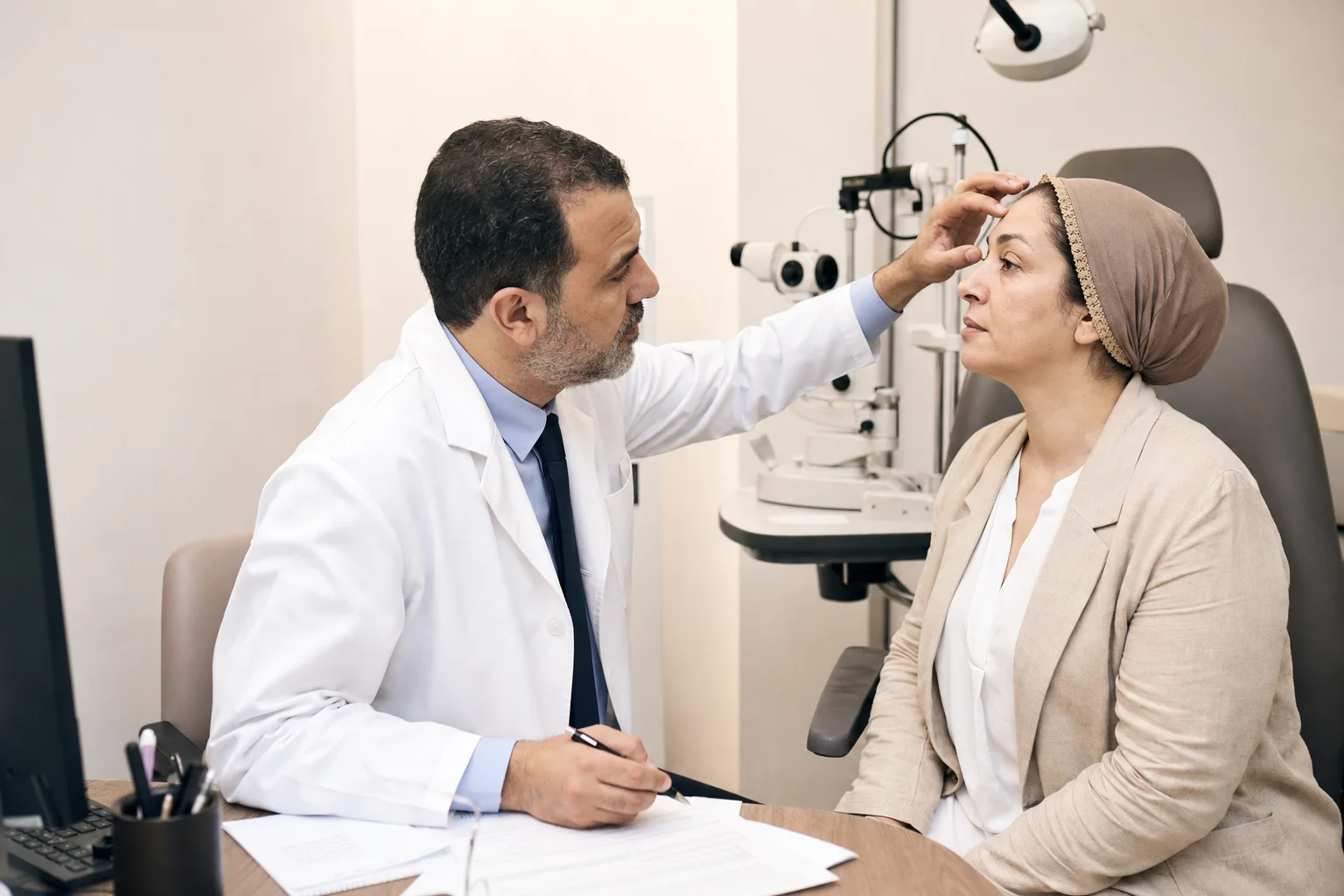
Successful integration of plasma technology depends on a formalised patient pathway. The initial consultation should establish the patient’s objective, diagnosis, expectations and suitability for a non-surgical option. In the periocular region, information about expected recovery, surveillance and when to contact the practice must be especially clear. Documenting consent, baseline photographs, the selected parameters and the treated area strengthens evaluation from case to case.
Follow-up is not a secondary appointment intended only to confirm an aesthetic result. It documents tissue response, identifies an evolution that does not match the expected course and supports a decision to reassess or refer when necessary. This organisation must be reflected in scheduling, patient information documents and team responsibilities. It enables the practice to deliver a controlled procedure rather than an isolated intervention.
A compact system designed for specialist workflow
Compactness can create an organisational advantage when equipment must fit into a clinical environment where room, preparation time and mobility matter. Wireless charging and limited footprint may simplify positioning within the practice or movement between consultation areas, subject to the workflow selected by the team. The touchscreen and guided software address a different need: they make parameter selection more visible and support a protocol-based approach.
Ergonomics never replaces medical competence. The practitioner remains responsible for indication, treatment area, application strategy and clinical assessment. However, when the interface, presets and training are coherent, they can reduce operational variability and make adoption more fluid. This is a compelling combination for specialists seeking an office-compatible tool, provided that strict clinical governance remains in place.
The right investment expands the practice without dispersing it
The interest of plasma technology in oculoplasty is therefore conditional, but it is not merely theoretical. Micro-plasma, non-contact energy delivery, differentiated handpieces and adjustable power levels describe a coherent approach for selected surface procedures and selected indications. Plexr’s value lies in the way it can connect energy precision, practice-friendly format and professional support.
The decisive question is not whether plasma can be marketed as a universal solution. It is where the technology can provide genuine clinical and organisational value within the practice: which procedure, which area, which protocol, which training and which follow-up. Once these points are defined, the device becomes more than an acquisition. It becomes a methodical extension of the practice’s oculoplastic capability.
Share this article
Professional FAQ
Which oculoplasty procedures are associated with Plexr technology?
GMV’s official Plexr Plus page mentions non-surgical blepharoplasty, xanthelasmas, certain cysts, nevi and conjunctival lesions. Each indication must be selected according to clinical examination, diagnosis, anatomical area and the practitioner’s professional scope.
Are Plexr Pro and Plexr Plus presented in the same way?
No. Plexr Pro is presented in GMV’s portfolio as a compact, versatile plasma device. The detailed ophthalmic indications cited here appear on the official Plexr Plus page. The configuration, accessories and regulatory scope of the model being considered should therefore be verified before purchase.
Does plasma technology replace oculoplastic surgery?
It should be considered a complementary option for selected oculoplastic, functional and aesthetic procedures, not as a universal replacement for surgery. The appropriate pathway depends on the indication and clinical assessment.
What support is available when adopting the technology?
GMV states that it offers practical training, updates, workshops, clinical protocols, video tutorials, in-person and online sessions, and technical assistance remotely or on site. The precise support pathway should be confirmed for the model and configuration supplied.
Sources and references
Official product
-
Plexr Pro
GMV Medical / PLEXR · Plexr Pro · gruppogmv.com
Accessed 2026-08-12 -
Plexr Plus official product page
GMV Medical / PLEXR · gruppogmv.com
Accessed 2026-08-12
