Objective measurement
A workflow dedicated to refraction data acquisition.
Objective refraction integrated into the pace of consultation.
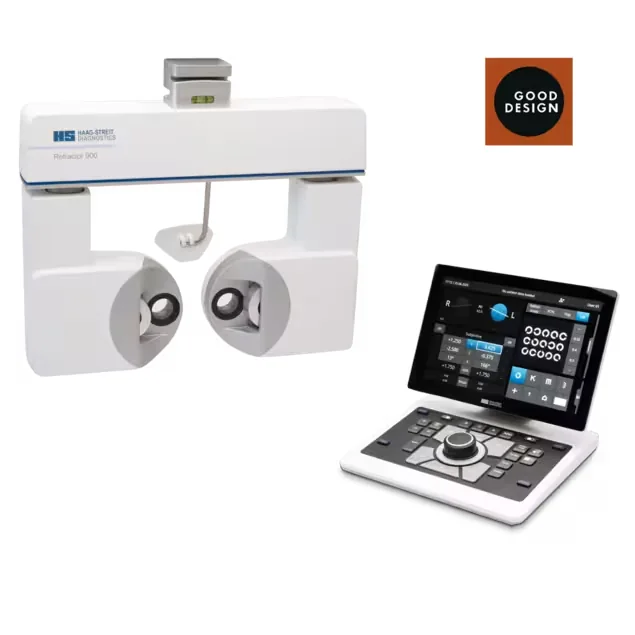
A workflow dedicated to refraction data acquisition.
Useful information remains accessible in the interface.
Results can join the practice refraction workflow.
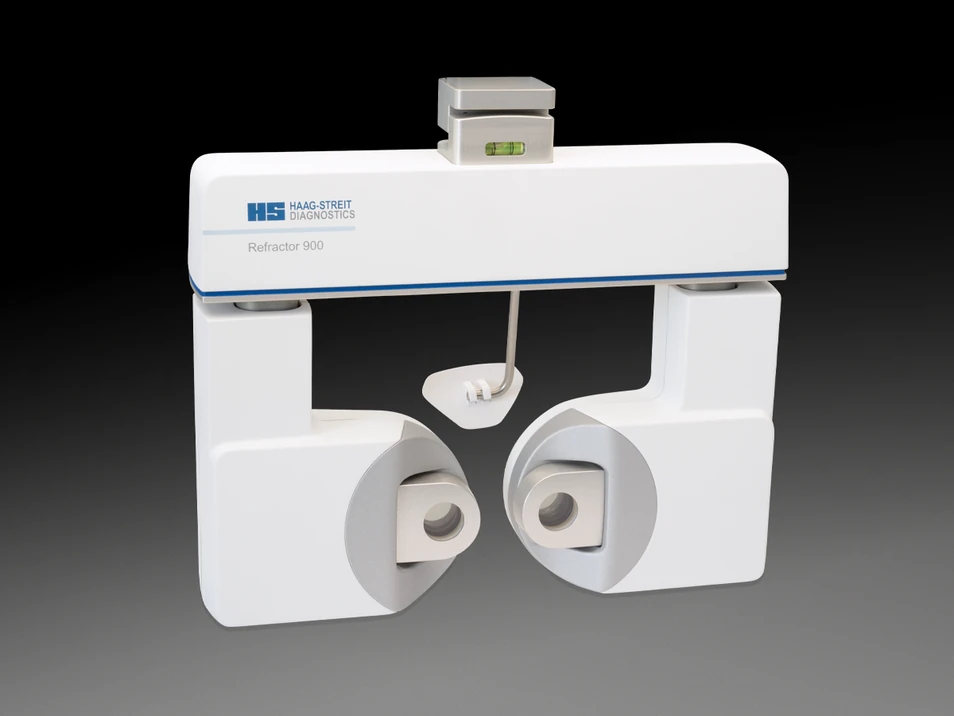
The optical design presents corrections within a structured refraction workflow.
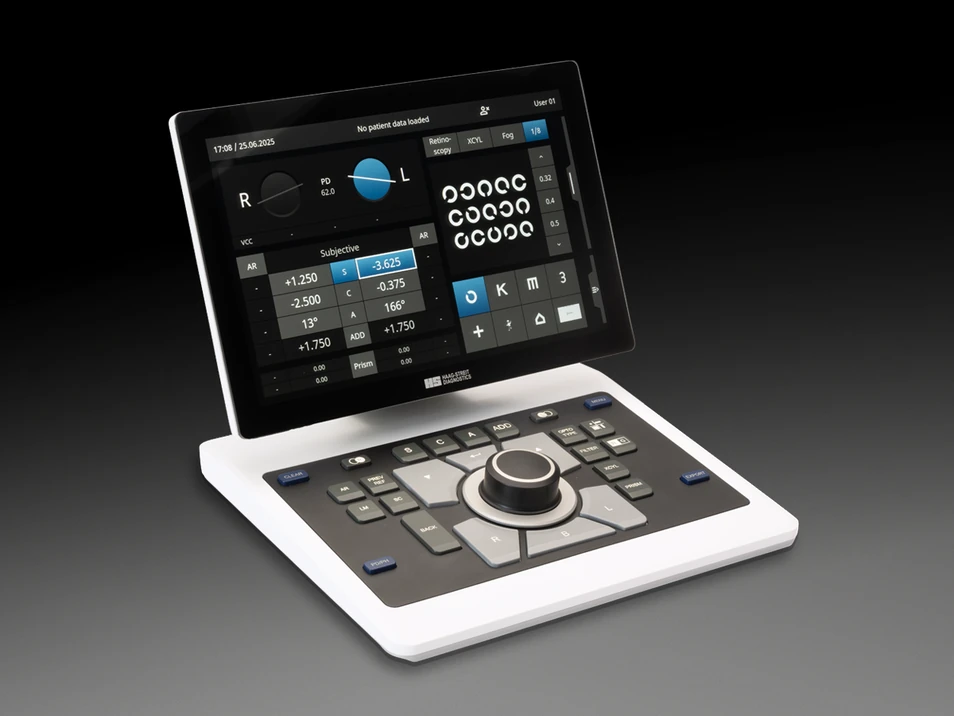
The station design keeps functions used during consultation close at hand.
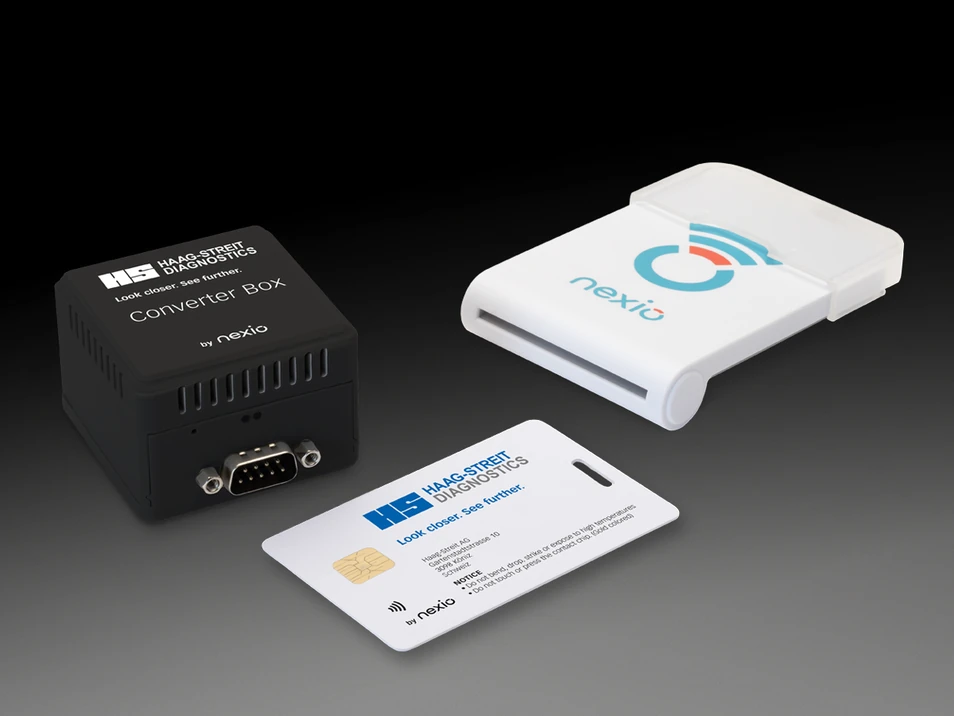
Documented connectivity supports data exchange with the refraction environment.
Refractor 900 is Haag-Streit’s digital refractor for subjective-refraction workflows. The motorised optical head, touch control panel and central unit are separate components with their own dimensions and weights. Sphere and cylinder settings can use 1/8-dioptre steps. Patient-record and device connections must be configured for the ASEM installation. The prism compensator, Acuity Chart 900 and Converter Box are variants or options to specify, not universally included accessories.
Sphere: −20 to +20 D Cylinder: 0–8 D Sphere and cylinder steps: 0.125 / 0.25 / 1 D Axis: 0–179° Axis steps: 1° / 10° Cross-cylinder: 0.125 / 0.25 / 0.5 D The brochure describes a Stokes-technology cross-cylinder and motorised lens changes. The 0–20 cm/m prism range applies only to Refractor 900 with a prism compensator. This option must not be attributed to the non-prism variant.
Pupil distance: 48–80 mm Pupil height: 0–13 mm Free aperture: 23 mm Convergence: 400 mm position Corneal vertex distance is visualised in real time; the table documents a 16 mm CVD marker with ±0.15 mm tolerance. Transparent lens carriers and motorised settings support examination. These construction characteristics are not a guarantee of each patient’s refraction outcome.
Touch screen: 10.1 inches Screen resolution: 1280 × 800 pixels Panel tilt: 30–45° The panel has a multifunction wheel and customisable refraction sequences. Optional Acuity Chart 900 can be controlled from the panel; showing it in a diagram does not make it standard equipment. Prism variant, acuity chart and accessory selections must be specified with ASEM.
The central unit documents PoE for the phoropter and panel, Bluetooth for Acuity Chart 900, RJ45 for EMR and Converter Box, and USB for the NFC system. Minimum network throughput is 100 Mbit/s. Optional Converter Box integrates compatible devices, including some third-party instruments. Versions, interfaces, security requirements and compatibility must be validated for the actual ASEM environment; universal compatibility is not promised.
Power supply: 100–240 V AC Frequency: 50–60 Hz Apparent power: 64.8 VA The phoropter head measures 309 × 75 × 235 mm (L × W × H, PD set to 64 mm) and weighs 3.3 kg. The control panel measures 241 × 280 × 213 mm and weighs 2.5 kg. The central unit measures 200 × 270 × 90 mm and weighs 2.8 kg. These dimensions and weights describe separate components, never an invented complete-system footprint or weight. Connections and supports must be specified in the quotation.
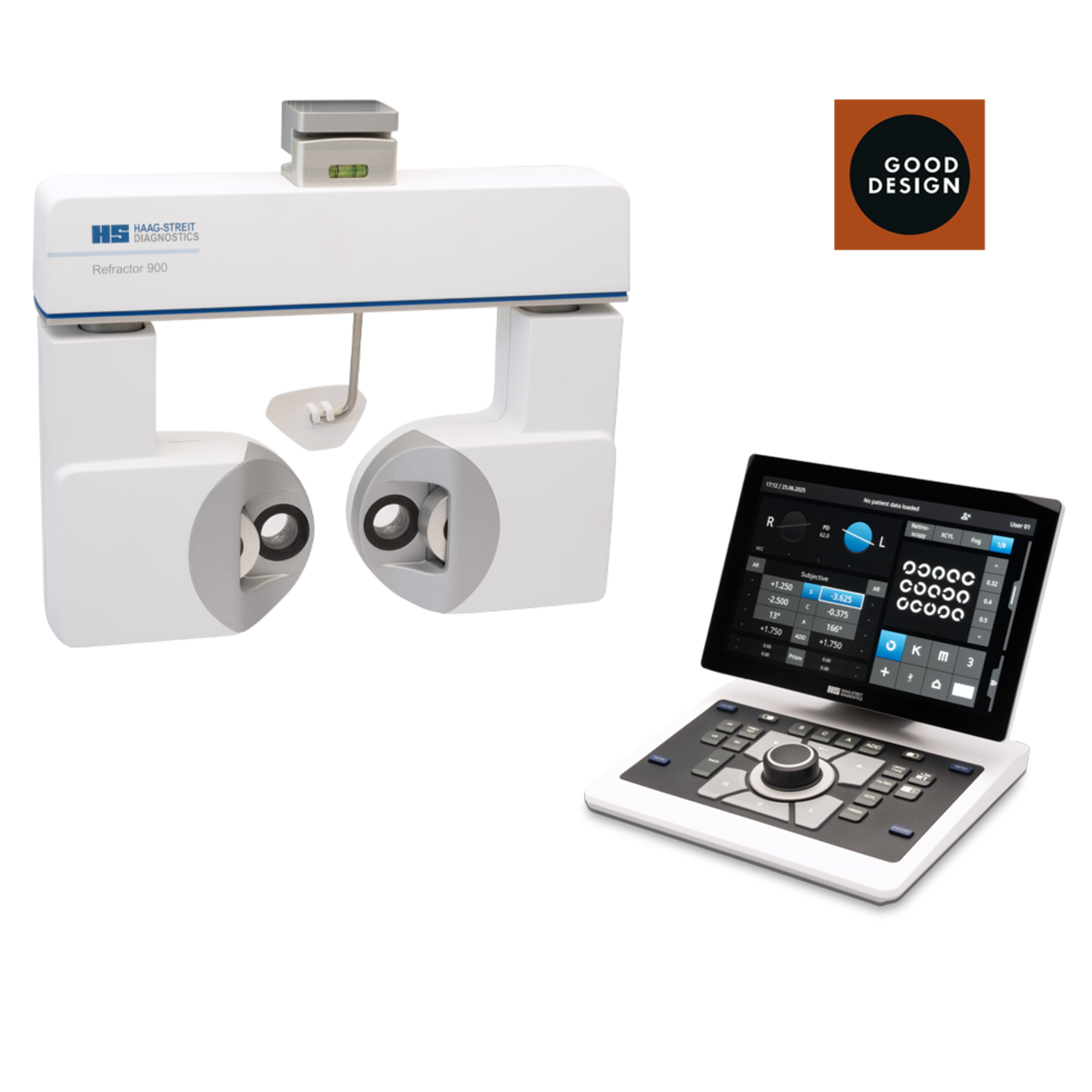
Refractor 900 — brochure fabricant, anglais (PDF · 12 pages)
Steps remain easy to sequence.
Results are easy to review.
Measurement fits into consultation.
Daily use remains structured.
A recommendation adapted to your requirements.
Commissioning and onboarding with the team.
Local technical support when you need it.
Ongoing support to operate the solution.
ASEM application
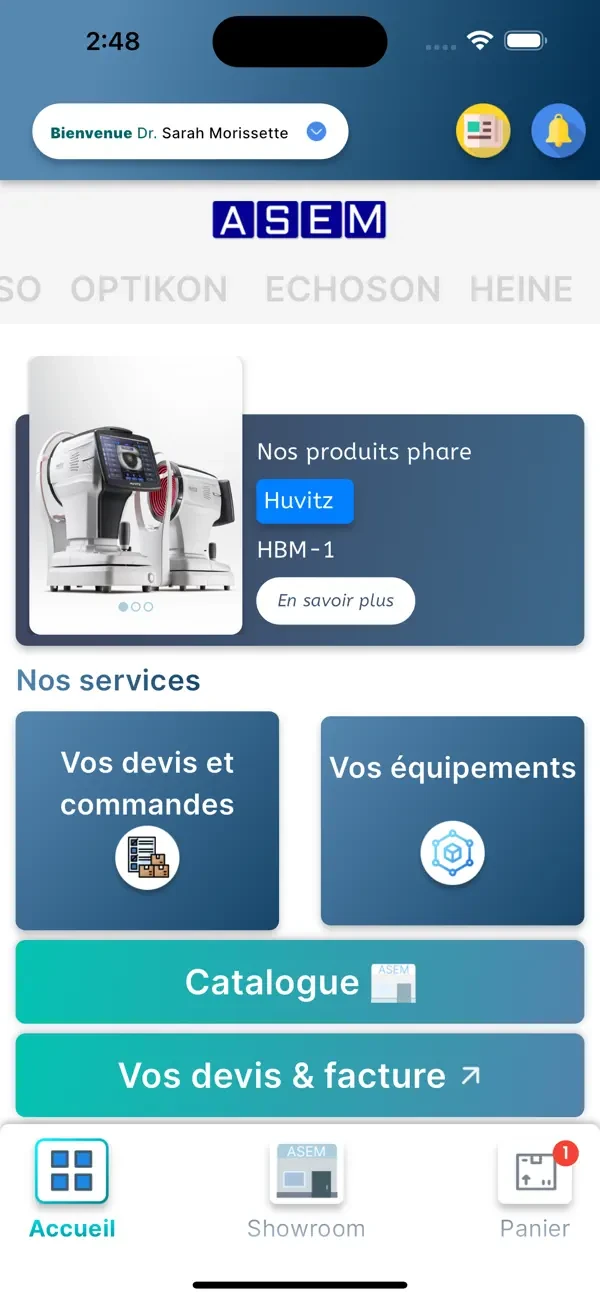
References, quotes, invoices and service in your pocket.
A first in Algeria


Objective refraction integrated into the pace of consultation.
A workflow dedicated to refraction data acquisition.
Useful information remains accessible in the interface.
Results can join the practice refraction workflow.
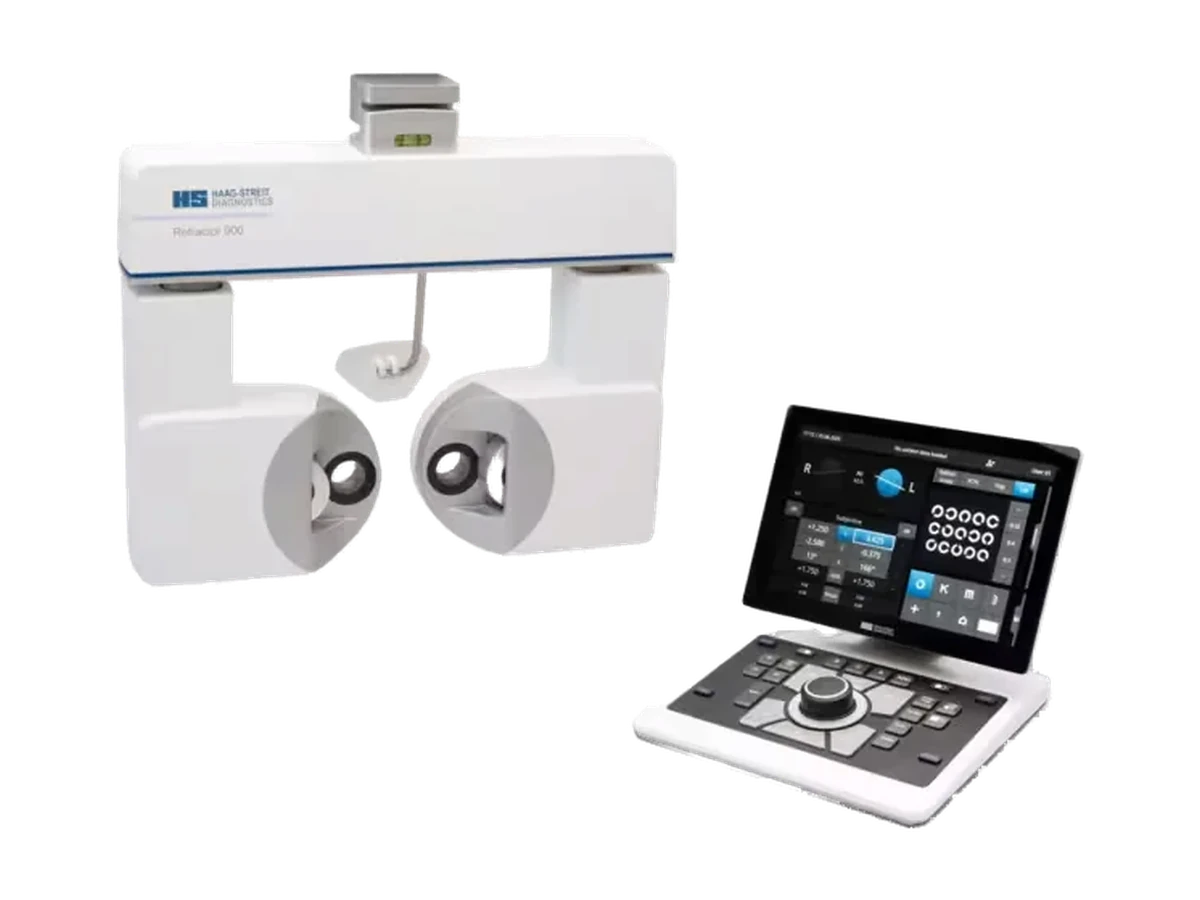
The optical design presents corrections within a structured refraction workflow.
The station design keeps functions used during consultation close at hand.
Documented connectivity supports data exchange with the refraction environment.
Refractor 900 is Haag-Streit’s digital refractor for subjective-refraction workflows. The motorised optical head, touch control panel and central unit are separate components with their own dimensions and weights. Sphere and cylinder settings can use 1/8-dioptre steps. Patient-record and device connections must be configured for the ASEM installation. The prism compensator, Acuity Chart 900 and Converter Box are variants or options to specify, not universally included accessories.
Sphere: −20 to +20 D Cylinder: 0–8 D Sphere and cylinder steps: 0.125 / 0.25 / 1 D Axis: 0–179° Axis steps: 1° / 10° Cross-cylinder: 0.125 / 0.25 / 0.5 D The brochure describes a Stokes-technology cross-cylinder and motorised lens changes. The 0–20 cm/m prism range applies only to Refractor 900 with a prism compensator. This option must not be attributed to the non-prism variant.
Pupil distance: 48–80 mm Pupil height: 0–13 mm Free aperture: 23 mm Convergence: 400 mm position Corneal vertex distance is visualised in real time; the table documents a 16 mm CVD marker with ±0.15 mm tolerance. Transparent lens carriers and motorised settings support examination. These construction characteristics are not a guarantee of each patient’s refraction outcome.
Touch screen: 10.1 inches Screen resolution: 1280 × 800 pixels Panel tilt: 30–45° The panel has a multifunction wheel and customisable refraction sequences. Optional Acuity Chart 900 can be controlled from the panel; showing it in a diagram does not make it standard equipment. Prism variant, acuity chart and accessory selections must be specified with ASEM.
The central unit documents PoE for the phoropter and panel, Bluetooth for Acuity Chart 900, RJ45 for EMR and Converter Box, and USB for the NFC system. Minimum network throughput is 100 Mbit/s. Optional Converter Box integrates compatible devices, including some third-party instruments. Versions, interfaces, security requirements and compatibility must be validated for the actual ASEM environment; universal compatibility is not promised.
Power supply: 100–240 V AC Frequency: 50–60 Hz Apparent power: 64.8 VA The phoropter head measures 309 × 75 × 235 mm (L × W × H, PD set to 64 mm) and weighs 3.3 kg. The control panel measures 241 × 280 × 213 mm and weighs 2.5 kg. The central unit measures 200 × 270 × 90 mm and weighs 2.8 kg. These dimensions and weights describe separate components, never an invented complete-system footprint or weight. Connections and supports must be specified in the quotation.
Refractor 900 — brochure fabricant, anglais (PDF · 12 pages)
Steps remain easy to sequence.
Results are easy to review.
Measurement fits into consultation.
Daily use remains structured.
A recommendation adapted to your organisation and requirements.
Commissioning and onboarding with ASEM teams.
Local technical support after installation.
Ongoing support to get lasting value from the solution.
ASEM application
Explore more references, request quotes, review invoices and contact after-sales service directly from your phone.
A first in Algeria for healthcare professionals.Catalogue, quotes, invoices and after-sales requests combined in the ASEM app.
