One Subjective Refraction Method for Every Examiner
A shared refraction room becomes more reproducible when trial lenses, accessories, storage and furniture follow one clear operating logic. Here is how to build that system.
In diesem Artikel
- Standardization starts before the first lens choice
- Why 236 trial lenses provide a strong common foundation
- Accessories should extend the method, not interrupt it
- The case configuration determines system mobility
- The refraction unit turns storage into clinical ergonomics
- From storage discipline to quality of care
- Build a shared method without standardizing clinical judgment
- Choose equipment according to real use
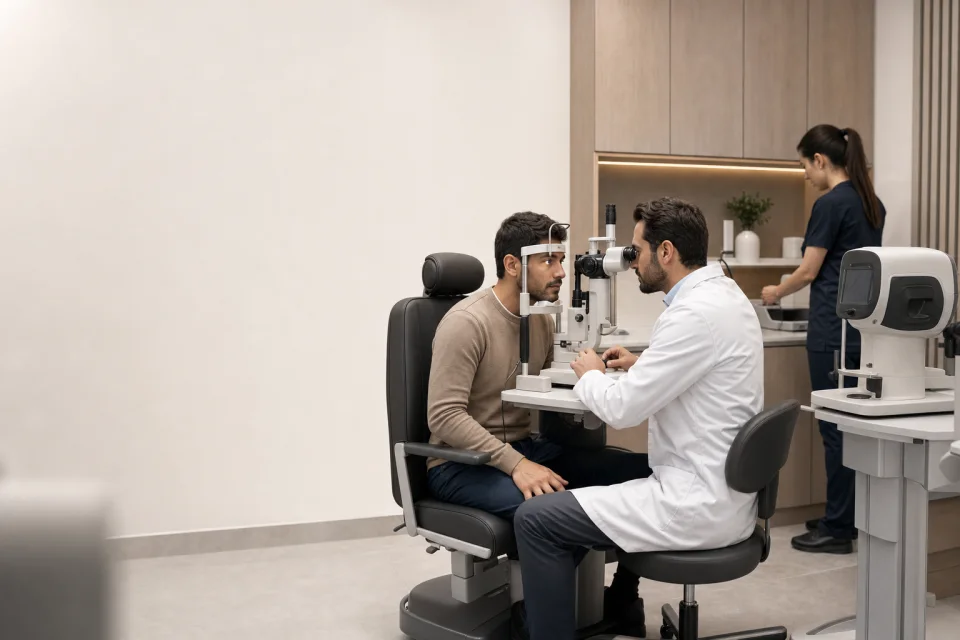
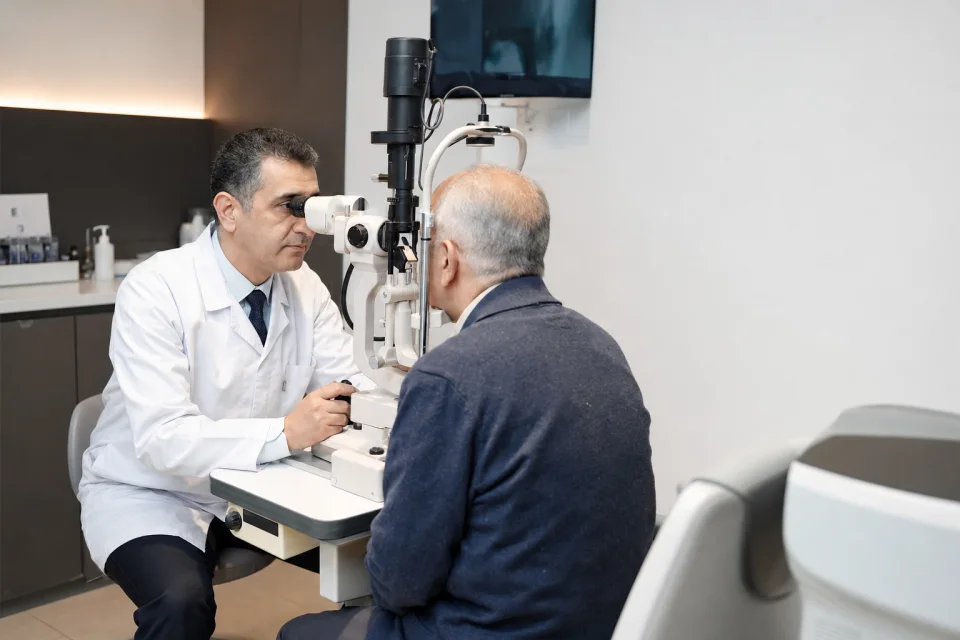
Subjective refraction is a disciplined clinical sequence, but its reproducibility can deteriorate as soon as several examiners share the same workstation. The difficulty is not necessarily clinical expertise. It often appears in operational details: a trial frame has been moved, powers are arranged according to a different logic, an accessory is missing from the tray, or the case has been placed outside reach. Each user then has to reconstruct a personal working environment before the examination has even begun.
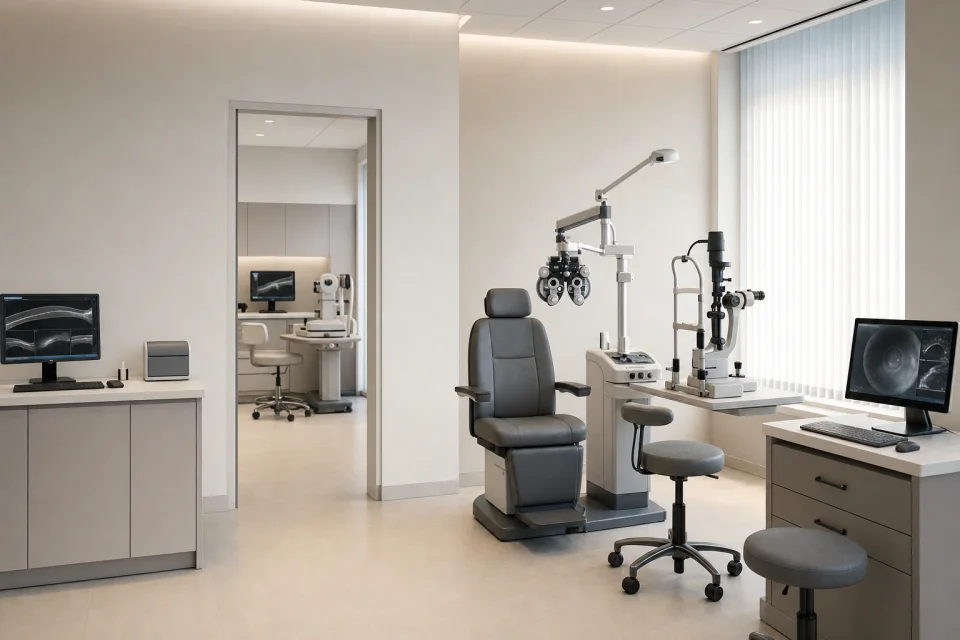
ASEM’s position is straightforward: refraction equipment should be treated as a working architecture, not as a simple inventory. The trial lens set, accessories, storage solution and workstation should form one coherent system. The objective is not to constrain subjective practice. It is to make transitions between examination steps immediately clear for every user, so that a shared method becomes easier to apply, teach and maintain.
Standardization starts before the first lens choice
In subjective refraction, equipment value is not determined only by the number of lenses available. The more meaningful criterion is whether the system supports the clinical sequence without creating unnecessary detours. The examiner should be able to move from sphere to cylinder, from binocular comparison to control accessories and then to fine adjustments, while retaining an immediate understanding of the material in use.
That requirement calls for shared terminology. Lenses should be stored according to a principle understood by the whole team: distinct categories, fixed positions, accessories grouped by function and systematic replacement after use. The mechanism is simple. When every item has a stable location, individual memory is less heavily taxed. The technical interest is direct: the examiner can concentrate on the patient’s responses rather than on logistics. The practical consequence is a smoother examination that can be taken over more easily by another professional.
A shared workstation should allow a new user to understand the equipment layout without relying on an oral explanation. If storage requires personal interpretation, standardization is not yet complete.
Why 236 trial lenses provide a strong common foundation
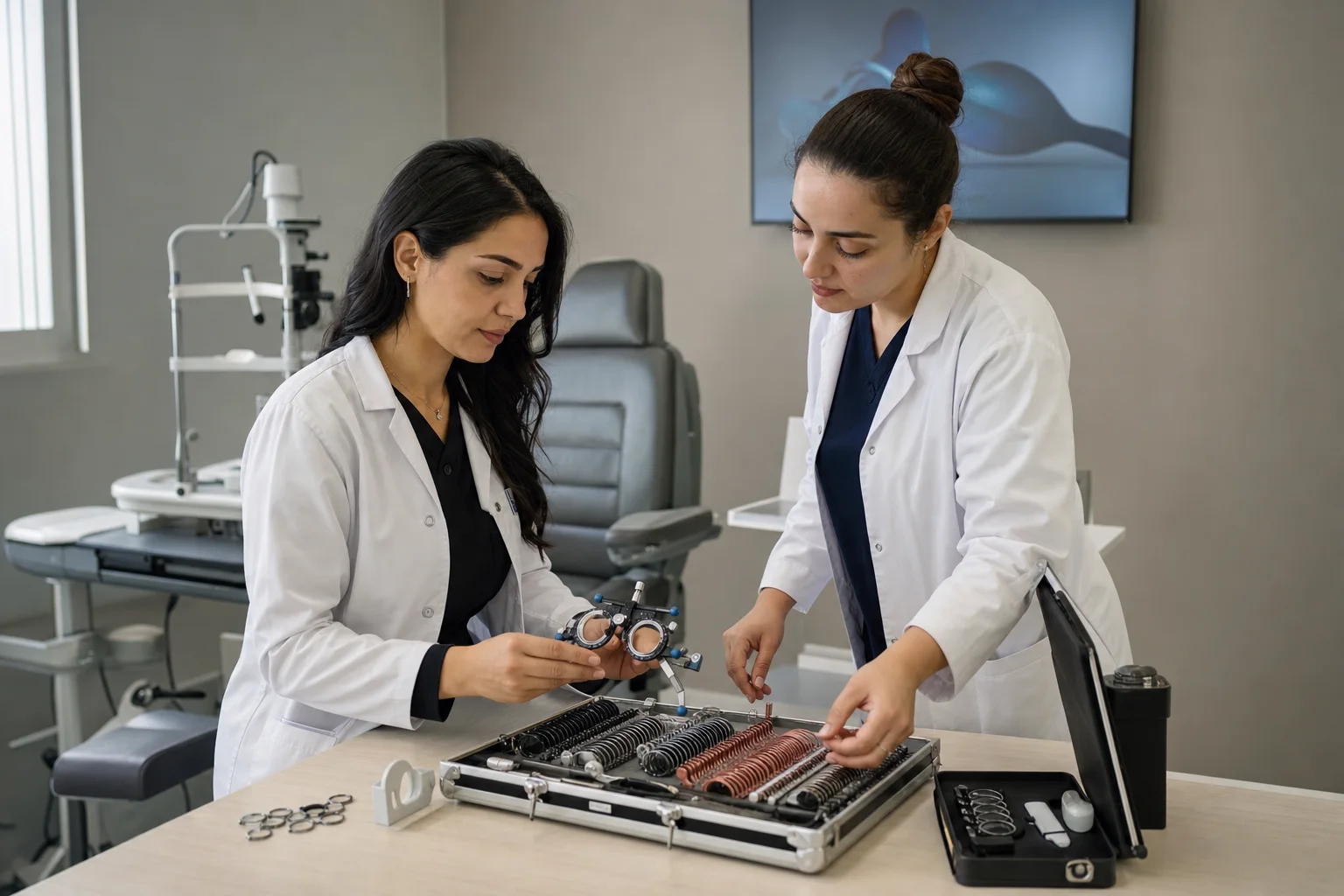
The 51-B – 236 B Ensembles de lentilles d'essai fits this requirement for a structured common base. It brings together 236 trial lenses in a set intended for optometry and ophthalmology professionals. That volume provides a broad equipment platform around which a practice can establish one shared working reference, rather than combining several incomplete or heterogeneous sets.
The value chain is especially relevant in a practice where several examiners use the same room. A centralized set first provides an identical starting point. That uniformity then supports lens classification, internal training and equipment checks after every examination. The team is no longer working with scattered personal collections, but with a common platform for subjective refraction.
Accessories should extend the method, not interrupt it
A standardized subjective-refraction setup does not depend only on spherical and cylindrical lenses. The F.I.S.O. catalogue lists a test flipper, retinoscopy racks, Berens prism bars, trial frames and cross cylinders of ±0.25 and ±0.50. Each accessory corresponds to a specific step or control point in the refraction pathway. Its presence and location should therefore be planned with the same discipline as the lenses themselves.
The efficiency mechanism is functional proximity. An accessory positioned in the same working area as the trial lenses can be selected at the appropriate moment without unnecessarily breaking contact with the patient or leaving the examination position. Cross cylinders, for example, should be immediately identifiable when cylindrical verification begins. Prism bars and trial frames should follow the same logic. The system’s value comes from continuity between the clinical gesture and the object supporting it.
A practical functional grouping
- Trial lenses: arrange the elements according to one constant logic known by the entire team.
- Trial frames: keep them in an immediately accessible area, separate from consumables and unrelated instruments.
- Cross cylinders: position them close to the cylindrical-verification sequence.
- Flipper and control accessories: identify them separately, but within the same working perimeter.
- Prism bars and retinoscopy racks: provide a dedicated location to prevent movement between examinations.
The case configuration determines system mobility
F.I.S.O. offers the 236-lens set in several configurations: an ABS carrying case, a plastic tray without a case, a lacquered beech wood case, a white sliding-cover case and a hanging white sliding-cover case. This is not merely an aesthetic decision. The configuration determines how the trial lens set relates to the workstation and to the wider organization of the practice.
The ABS case supports mobility and protection when the same set must be moved. The tray without a case prioritizes direct access in an environment where storage is already controlled. The wooden case establishes a more permanent and structured presence. Sliding-cover versions can suit an organization in which opening and closing must remain rapid, without placing a loose lid on the work surface. Each architecture answers the same operational need differently: the material must remain available, identifiable and protected.
The refraction unit turns storage into clinical ergonomics
Even the most complete trial lens set loses part of its value if it is installed far from the examination area. The workstation should therefore extend the logic of the case. F.I.S.O. states that some refraction units include a dedicated drawer for trial lenses, positioned for user comfort. Most ophthalmic units also include a foldaway anti-dust drawer for the ophthalmoscope and skiascope.
This design acts at several levels. The dedicated drawer first reduces equipment dispersion. It then protects lenses and instruments when they are not in use. Finally, it creates a shared storage point, making visual checks easier after the examination. The practical value is significant: restoring order becomes a natural step in the workflow rather than a task postponed or left to the person using the workstation next.
The workstation’s material and stability also contribute to this coherence. F.I.S.O. refraction units are made of steel and wood, with a design focused on stability, sturdiness and reliability. For the team, this provides a stable physical base around which the trial lens set and accessories can remain organized. Ergonomics therefore extends beyond drawer position: it includes solidity, access and continuity of use.
From storage discipline to quality of care
Standardizing equipment has a clinical significance that goes beyond practice efficiency. Uncorrected refractive error remains a leading cause of vision impairment in all countries, among both children and adults. The quality of subjective refraction is therefore part of a care pathway in which method clarity and equipment availability should remain consistent.
The World Health Organization also identifies eyeglasses correction for refractive error among the most cost-effective health-care interventions. This reinforces ASEM’s view that workstation organization should not be treated as an administrative detail. It supports a common and valuable intervention directly connected with the patient’s visual pathway. Accessible, complete and coherent equipment helps the team preserve that quality from one examiner to the next.
Build a shared method without standardizing clinical judgment
Standardization does not mean imposing the same answer on every patient. Subjective refraction remains a process of interpretation, refinement and validation led by a qualified professional. Standardization concerns the environment: the same access to equipment, the same storage logic, the same accessories and the same ability to restore the workstation. Clinical reasoning retains its central role; it is simply supported by more legible infrastructure.
This distinction matters in a multidisciplinary team. Ophthalmologists, orthoptists and other professionals involved in refraction may have different habits, but they should be able to share the same material language. A lens should be found in the same place, a trial frame should be available at the same stage and an accessory should be identifiable without ambiguity. The answer is not necessarily to multiply equipment, but to coordinate the equipment that is already clinically necessary.
Choose equipment according to real use
The final decision should begin with the practice configuration: number of users, workstation location, whether the trial lens set must be moved, available space and the desired level of centralization. F.I.S.O. also offers 148- and 96-element sets, as well as specific configurations. The 51-B – 236 B Ensembles de lentilles d'essai is most relevant when the objective is a broad, shared base without fragmenting equipment between users.
One configuration point should be handled centrally: availability of a reference, the precise case selection and the association with a workstation or accessory package should be confirmed during the technical exchange. This validation aligns the contents of the set, its storage and the workstation ergonomics with the team’s actual workflow.
Diesen Artikel teilen
FAQ für Fachkräfte
Why standardize a trial lens set in a shared practice?
Standardization ensures that every examiner finds the same equipment according to the same storage logic and can apply a consistent subjective-refraction sequence.
Which trial lens set is suitable for a complete shared setup?
The 51-B – 236 B Ensembles de lentilles d'essai is a complete 236-lens option. F.I.S.O. also offers 148- and 96-element sets according to the required level of equipment.
Which accessories should be integrated into a refraction workstation?
The F.I.S.O. catalogue lists a test flipper, retinoscopy racks, Berens prism bars, trial frames and ±0.25 and ±0.50 cross cylinders, among other accessories.
How should trial lenses be organized when several examiners use the same workstation?
Use a fixed, visible and repeatable logic, then position storage close to the examination area. Some F.I.S.O. refraction units include a dedicated drawer for trial lenses.
Quellen und Referenzen
Scientific Document
-
www.fiso.info
F.I.S.O. · 51-B – 236 B Ensembles de lentilles d'essai · www.fiso.info
Abgerufen am 2026-10-28
Institutional Source
-
Blindness and vision impairment
F.I.S.O. · 51-B – 236 B Ensembles de lentilles d'essai · www.who.int
Abgerufen am 2026-10-28
Offizieller Katalog
-
F.I.S.O. refraction units
F.I.S.O. · www.fiso.info
Abgerufen am 2026-10-28
Veranstaltungen zu diesem Thema

Vision to Venture Weekend 1
Budapest, UngarnEuropean Society of Cataract and Refractive Surgeons
Eine professionelle ophthalmologische Veranstaltung, organisiert von European Society of Cataract and Refr...
31. Wintertagung der ESCRS
Le Caire, ÄgyptenEuropean Society of Cataract and Refractive Surgeons
Eine professionelle ophthalmologische Veranstaltung, organisiert von European Society of Cataract and Refr...
ASCRS Annual Meeting 2027
San Diego, Vereinigte StaatenAmerican Society of Cataract and Refractive Surgery
Eine professionelle ophthalmologische Veranstaltung, organisiert von American Society of Cataract and Refr...