After Cataract Surgery, When Should Nd:YAG Capsulotomy Be Considered?
Nd:YAG capsulotomy belongs within a structured clinical decision: relate the patient’s complaint to examination findings, prepare the procedure and document follow-up. ASEM presents the Q-Las as a dedicated platform for this post-cataract pathway.
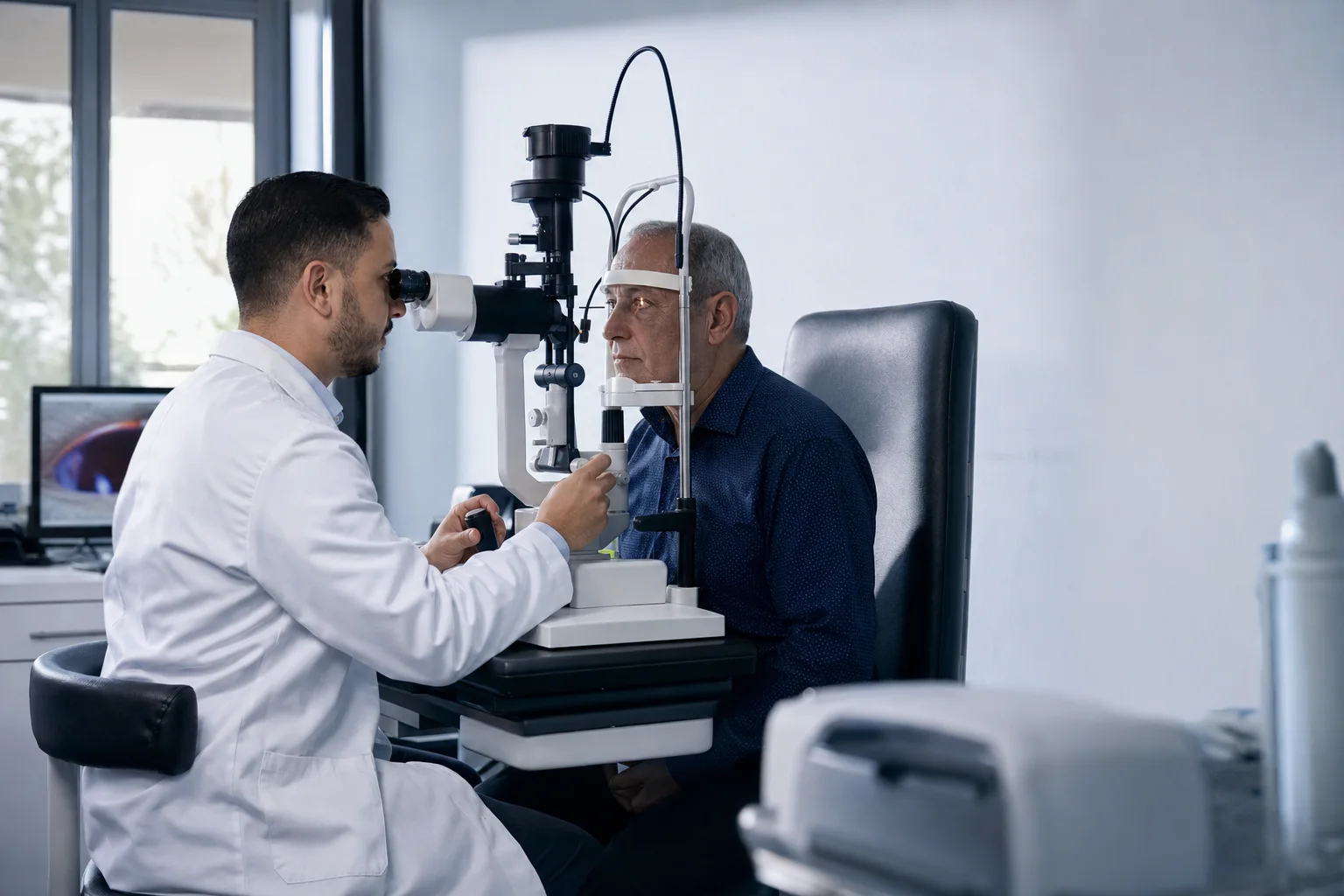
The question “when should Nd:YAG capsulotomy be considered?” requires a methodical answer. After cataract surgery, a persistent or newly reported visual complaint needs to be placed in its clinical context: the quality of vision described by the patient, the anterior-segment examination, the condition of the visual axis and the consistency between the examination and the intended objective. This article does not replace a validated indication protocol, and the supplied evidence ledger does not include a dedicated guideline or review on posterior capsular opacification or Nd:YAG capsulotomy. Accordingly, the central decision belongs to the ophthalmologist who examines the patient. ASEM’s contribution is operational: once the specialist has determined that the situation is appropriate for an Nd:YAG procedure, the pathway should remain traceable from consultation to treatment and review. That traceability begins with identifying the treated eye, recording the clinical finding that motivated the decision and defining the intended purpose of the session before the patient is positioned at the slit lamp. The laser session then becomes a documented continuation of the examination rather than an act detached from the post-cataract pathway. This distinction is valuable when the result is assessed later or when a residual complaint requires further analysis.
1. Confirm the clinical need before preparing the laser
The first step is to make the relationship between the reason for consultation and the clinical finding explicit. The record should distinguish the functional problem reported by the patient, what is observed clinically and what the proposed procedure is intended to address. This discipline supports the relevance of the decision: it prevents every post-cataract visual complaint from being treated as a laser problem and preserves a meaningful baseline for subsequent review. The specialist’s assessment may include examination of the visual axis and the posterior capsule, but the interpretation of those findings and the decision to treat must remain clinically led. Neither the Q-Las product sheet nor the general WHO material supplied for this article establishes a specific threshold for treatment, an opening size, an energy protocol or a mandatory follow-up schedule. The pre-laser examination also prepares the practical conditions of the session. The visibility of the relevant area, the position of the intended treatment zone and the quality of observation influence how the ophthalmologist works at the biomicroscope. The objective is not to impose an artificial uniformity on every eye, but to ensure that the treatment plan is consistent with the findings and the specialist’s protocol. The WHO’s quality-of-care resource is structured around preoperative, intraoperative and postoperative phases of cataract-surgery management. ASEM uses this as a general organisational reference: consultation, laser treatment and review should be linked by one clinical purpose. It should not be read as direct evidence for a particular Nd:YAG indication.
The key operational question is not simply “does the patient report a symptom?” but “has the specialist documented a clinical assessment that supports the intended laser objective?” This framing belongs to the treating ophthalmologist’s reasoning and must remain distinct from a disease-specific recommendation that is not supplied in the evidence base.
2. Why the Q-Las architecture matters in the procedure
The Q-Las is a Q-switched Nd:YAG laser intended, among other applications, for capsulotomy and iridotomy. Its role is therefore clearly positioned within anterior-segment Nd:YAG work. It is not being presented as a general-purpose ophthalmic laser capable of every application; its value lies in the applications identified by A.R.C. Laser and in the way its functions are brought together at the slit lamp. The manufacturer’s official product information specifies an adjustable energy range of 0.5–10 mJ. The practical mechanism is straightforward: the ophthalmologist has an explicit energy control that can be selected according to the clinical assessment and the centre’s protocol. The technical interest is direct access to a defined treatment parameter; the practical consequence is a session that is easier to prepare and record coherently. The commercial value is the alignment between the laser’s intended application and a structured procedure—not an unsubstantiated promise of a clinical outcome. The Burst-Mode levels can be changed through a dedicated control. This is an ergonomic feature, but it also has workflow significance. The mode change is kept within the treatment-control sequence rather than requiring the practitioner to break attention between observation and adjustment. When posture, visualisation and precise interaction with the biomicroscope matter, that continuity is technically relevant. The Q-Las also combines the laser beam and slit-lamp illumination coaxially. This means that delivery and observation are aligned within the same optical working axis. In practical terms, the system supports a more coherent relationship between what the practitioner observes and what the laser is set to deliver. It does not replace examination, clinical judgement or local training; it strengthens the technical environment in which those decisions are executed.
3. Prepare the session: visualisation, alignment and documentation
Once the specialist has made the clinical decision, preparation should preserve the same logic. The treated eye, the reason for the session, the intended objective and the information to be compared later should be identifiable before treatment begins. The treatment zone and centration are matters for the practitioner’s assessment; they cannot be derived from a product brochure or standardised independently of the patient’s anatomy and clinical context. This is where the Q-Las architecture has practical relevance. Because the laser beam and slit-lamp illumination are coaxial, the system supports observation aligned with delivery. The appropriate claim is not that coaxiality automatically produces a superior clinical result. Rather, it helps make the relationship between the observed zone and the treatment axis more coherent within the workflow. The Clear-View filter technology contributes to the system’s visualisation architecture according to the configuration and conditions of the session. Documentation completes the pathway. The centre should record the information needed to understand what was planned and what was performed, in accordance with its clinical and quality procedures. The optional Head-up Display can keep treatment parameters visible within the practitioner’s field of attention when the selected configuration and local protocol make that useful. This approach is deliberately practical. It does not turn manufacturer specifications into medical recommendations. It gives the ophthalmologist and the service manager a clear basis for assessing whether the platform supports the way the team intends to work.
4. A platform designed for continuity of work
In a clinic or hospital department, a laser’s value is not limited to its nominal treatment capability. It is also measured by how naturally it fits the actual sequence: patient positioning, observation, parameter selection, delivery, recording and discharge. The Q-Las brings together several features that support this continuity: dedicated Burst-Mode control, accessible energy adjustment, coaxial beam and illumination, Clear-View filter technology and optional parameter display. The documented QuickRepetition capability of up to 10 Hz should be interpreted carefully. It describes what the system can provide; it does not establish a target speed for an individual session. The ophthalmologist retains control of treatment rhythm according to the protocol, visualisation and clinical situation. This distinction allows the product to be presented with confidence without turning a technical capability into a clinical promise. The A.R.C. Laser portfolio also describes the Q-Las-D as the latest version with a diode-pumped cavity for pulse-to-pulse stability. For a service reviewing platform continuity and technical architecture, this version merits a separate discussion with ASEM so that the appropriate model and configuration can be assessed against the intended installation. The wider commercial question is therefore one of fit. Does the platform match the service’s anterior-segment laser activity? Can it be integrated into the room and patient flow? Does the selected slit lamp support the team’s working method? Can a broader laser project be considered alongside retinal activity? ASEM’s role is to examine these questions with the centre rather than reduce the discussion to a specification list.
5. Plan the review around the original clinical objective
A well-organised Nd:YAG pathway does not end when the laser has delivered its treatment. The review should be planned according to the specialist’s protocol and the patient’s situation, with the purpose of comparing the findings after treatment with the objective defined beforehand. If the complaint persists, the appropriate next step is renewed clinical assessment—not automatic repetition of the procedure or automatic attribution of the symptom to the capsule. This is ASEM’s operational interpretation of continuity of care. The WHO states that quality cataract-surgery management can be organised across preoperative, intraoperative and postoperative phases, and its broader eye-care information notes that some conditions require long-term monitoring. Those sources do not constitute a specific post-Nd:YAG capsulotomy follow-up guideline. The timing, examinations and decisions remain the responsibility of the treating ophthalmologist and the protocols of the centre. Documentation gives the review practical value. It allows the team to retrieve the original reason for treatment, the selected configuration and the recorded parameters, then compare the observed result with the original clinical intention. The Q-Las supports this continuity through an interface that brings adjustment, visualisation and control into one working environment.
For a specialist performing or planning to introduce Nd:YAG capsulotomy, the central criterion is not simply whether a laser is present in the room. The service should assess the fit between clinical need, visualisation, control logic, session documentation and planned review. On this basis, the Q-Las presents a coherent technical profile: a clearly positioned Nd:YAG application range, coaxial optical architecture, accessible Burst-Mode control, integrated Clear-View technology and configuration options around the slit lamp. That coherence becomes particularly relevant when the project forms part of a broader laser service. The stated compatibility with the Classic retinal laser allows the centre to examine a combined anterior-segment and retinal configuration, subject to validation of the selected installation. ASEM therefore brings more than equipment supply: it provides technical configuration analysis, room-integration support and a workflow discussion aligned with the service’s operating requirements. The medical decision remains where it belongs—with the ophthalmologist who examines the patient. The technical partner’s responsibility is to ensure that, once a procedure is clinically selected, the platform and its integration support a clear, controlled and documentable pathway.
Share this article
Professional FAQ
Is a visual symptom by itself enough to propose Nd:YAG capsulotomy?
No. In ASEM’s operational approach, the complaint is the starting point, not the conclusion. The specialist must assess the eye and determine whether the findings support the intended laser procedure rather than another clinical direction or observation. The supplied evidence base does not constitute a specific Nd:YAG indication guideline, so the medical decision remains the responsibility of the treating ophthalmologist.
What role does the Q-Las play in this pathway?
The Q-Las provides the Nd:YAG platform intended, among other applications, for capsulotomy and iridotomy. Its adjustable energy range of 0.5–10 mJ, dedicated Burst-Mode control, coaxial beam and slit-lamp illumination, and visualisation features support a coherent workflow at the biomicroscope.
What should be prepared before the session?
The centre should have the relevant clinical assessment, the eye to be treated, the purpose of the procedure and the information it intends to document. Treatment planning, visualisation, centration and energy selection remain matters for the specialist’s examination and local protocol; they should not be inferred from the product specification alone.
Can the Q-Las be supplied with different slit-lamp configurations?
The manufacturer’s official product information states that the Q-Las is available with two different slit-lamp types and can be combined with the Classic retinal laser. The appropriate configuration should be defined with ASEM according to the clinical workflow, room architecture and installation requirements.
How should review after treatment be organised?
Review should be planned according to the treating specialist’s protocol and the patient’s clinical situation. It should allow the post-treatment findings and the original objective to be compared. A persistent complaint should prompt renewed clinical assessment rather than automatic repetition of treatment. The supplied WHO sources support the general value of planned care and monitoring, but do not provide a specific post-capsulotomy schedule.
Sources and references
Official product
-
Q-Las
A.R.C. Laser · Q-Las · www.arclaser.de
Accessed 2026-08-10
Institutional Source
-
Summary of recommendations for quality of care in cataract surgery management
A.R.C. Laser · Q-Las · www.who.int
Accessed 2026-08-09 -
One in two people facing cataract blindness need access to life-changing surgery
A.R.C. Laser · Q-Las · www.who.int
Accessed 2026-08-09 -
Eye care, vision impairment and blindness
A.R.C. Laser · Q-Las · www.who.int
Accessed 2026-08-09 -
Blindness and vision impairment
A.R.C. Laser · Q-Las · www.who.int
Accessed 2026-08-09 -
Eye health | WHO | Regional Office for Africa
A.R.C. Laser · Q-Las · www.afro.who.int
Accessed 2026-08-10
Scientific Document
-
www.afro.who.int
A.R.C. Laser · Q-Las · www.afro.who.int
Accessed 2026-08-10
Official catalogue
-
A.R.C. Laser ophthalmology portfolio
A.R.C. Laser · intern.arclaser.com
Accessed 2026-08-10