How to Build a Coherent Ophthalmology Practice: From Consultation to Advanced Diagnostics
A high-performing ophthalmology practice is built as a clinical pathway: refraction, direct examination, imaging, functional follow-up, specialist diagnostics and, separately, surgery.
In this article
- 1. Build the consultation core around the clinical sequence
- 2. Make imaging a diagnostic workstation, not an isolated device
- 3. Add functional assessment: perimetry has a distinct role
- 4. When cataract becomes a major activity, structure the biometry pathway
- 5. Add specialist extensions according to real activity
- 6. If the practice becomes a surgical centre, design a separate platform
- Four practical levels for planning a coherent platform
The right ophthalmology practice equipment is first a question of architecture. A patient may arrive with reduced vision, a suspected pathology, an ocular-surface complaint or a preoperative requirement. The pathway should remain legible: each acquisition should clarify the next clinical step, and each workstation should have a defined role. The value of a technical platform therefore lies less in the number of devices than in the relationship between their functions, installation and contribution to clinical decision-making. This principle is particularly important in Algeria, where space, activity mix, staffing and service organisation must be considered alongside the equipment itself.
1. Build the consultation core around the clinical sequence
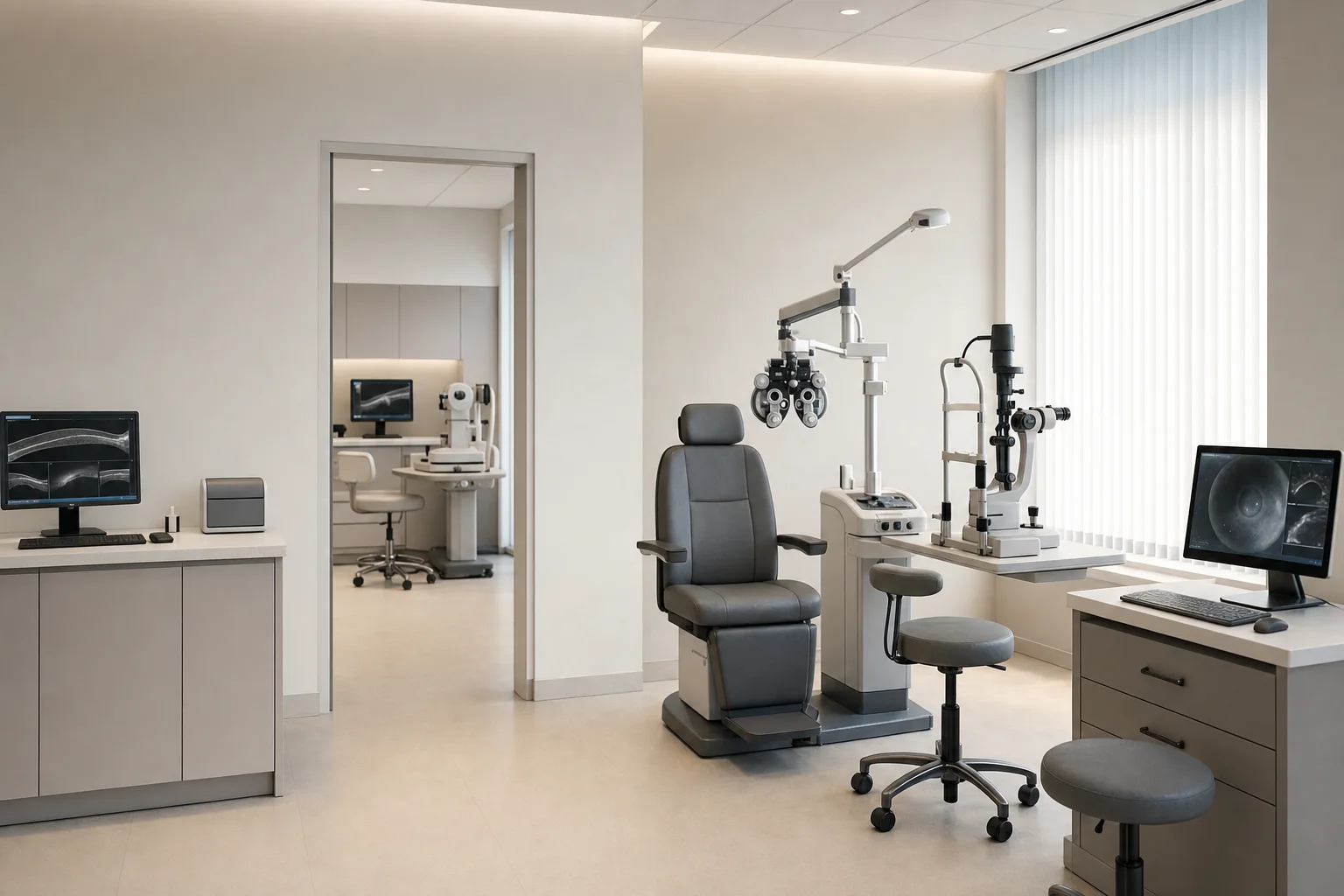
The first level should minimise breaks between patient positioning, objective measurement, subjective refraction and biomicroscopic examination. The Easyvisus RM64 — 3 instruments provides a strong physical foundation for this workstation. It can accommodate three instruments, with a manual rotating table or automatic positioning depending on configuration. Electric adjustment of the table and PRIMA chair supports both patient installation and the practitioner’s working position. The mechanism is straightforward: instruments remain grouped around one examination area instead of being dispersed across several rooms or repeated transfers. The practical consequence is a more predictable consultation flow and a better basis for integrating objective and clinical observations.
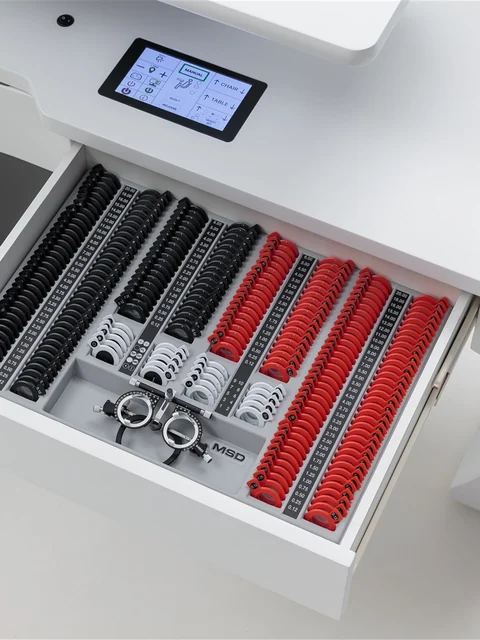
Within this architecture, the HRK-9000A provides objective refraction and keratometry. Its TFBUT analysis function also documents tear-film stability within the refraction interface. The technical interest is that the measurement can contribute to the interpretation of visual quality when the ocular surface may influence the result. The practical value lies in connecting automated acquisition with clinical judgement—not in confusing an objective refractive measurement with a complete ocular-surface assessment. The HRK-9000A is therefore a useful first layer in a pathway that may later be expanded with dedicated dry-eye diagnostics.
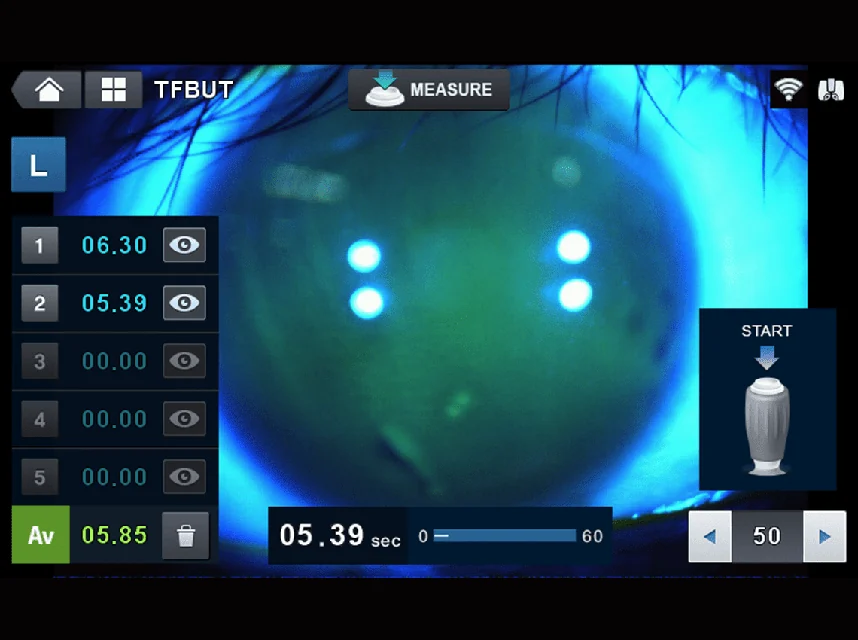
The HDR-9000 then supports complementary subjective refraction. Its displayed pathway organises the examination steps and practitioner choices, while the main controls are grouped in a central interface. This reduces interruptions during testing and supports comparison of corrections with the patient. HRK-9000A and HDR-9000 should not be treated as redundant devices: the first structures objective measurement, while the second supports the subjective decision. Placed within an appropriate unit, they create a more readable refraction workflow and help the team distinguish measurement from prescription refinement.
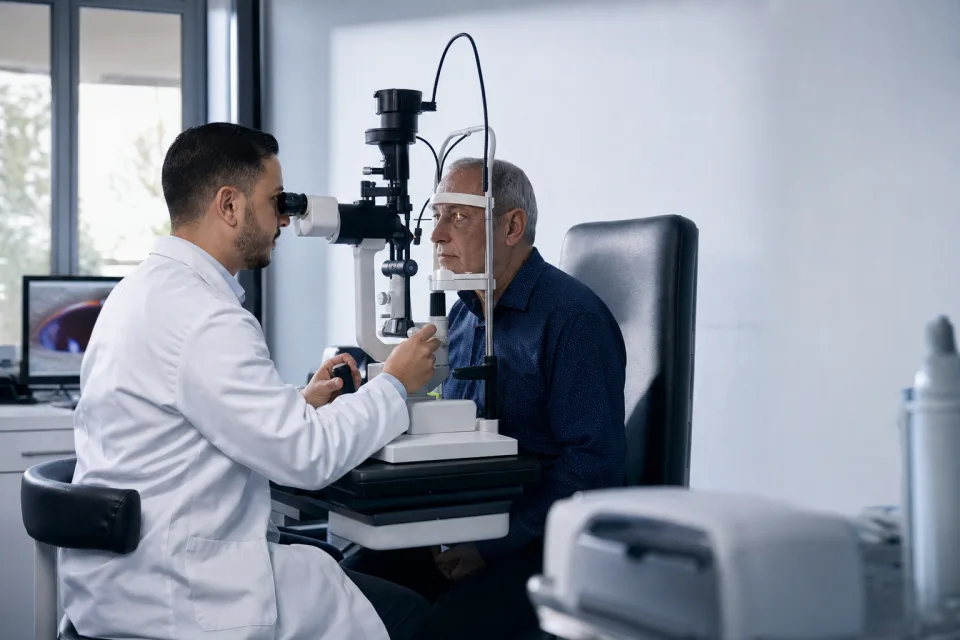
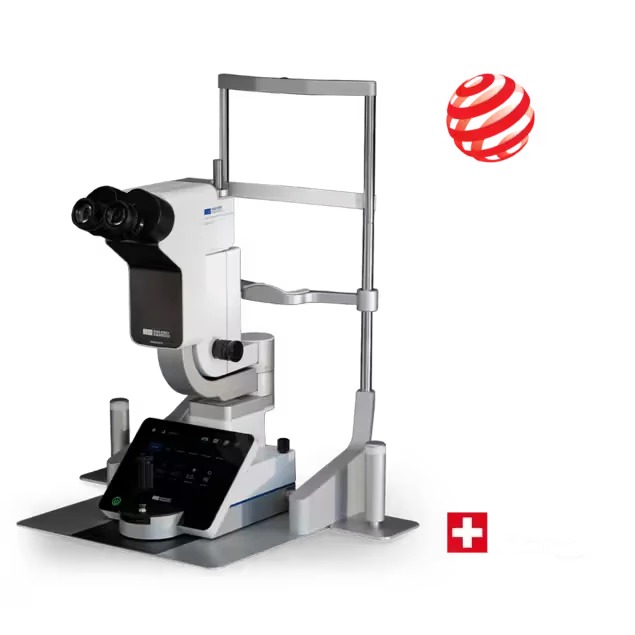
Direct examination remains the point at which measurements are confronted with clinical observation. The Elara 900 is designed for detailed anterior-segment observation and routine clinical examination. Its optical system supports examination of the cornea and anterior segment, while the controls and adjustments assist the positioning required for the clinical manoeuvre. The practical consequence is important: the slit lamp is not merely the final station after refraction. It is the point where the practitioner interprets the patient’s presentation in the light of the preceding measurements. That relationship gives the consultation core its diagnostic coherence.
2. Make imaging a diagnostic workstation, not an isolated device
When the clinical pathway requires deeper structural assessment, imaging should be planned as a genuine diagnostic workstation. OCTavius brings together, according to the documented configuration, 3D OCT, fundus camera, angiography, biometry and topography. This multimodal approach allows several families of information to be acquired within one imaging pathway: retinal structure, fundus documentation and complementary measurements. The manufacturer states an acquisition speed of up to 80,000 scans per second. That figure should be interpreted in the context of the selected configuration, examination protocol and actual clinical use rather than as a standalone promise of performance.
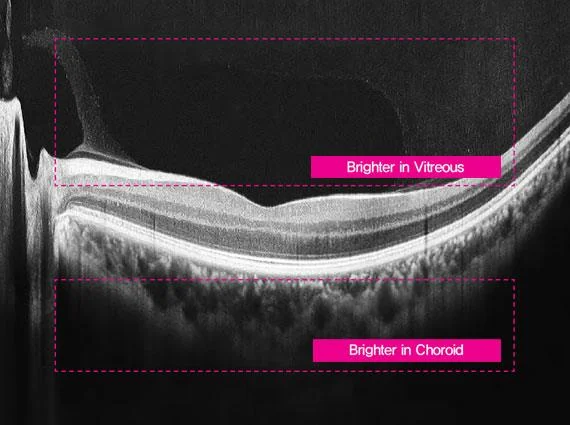
The technical interest is not simply the presence of several modalities. OCTavius comparison tools provide a basis for reading examinations over time, provided that acquisition conditions and protocols are managed consistently. The practical implication extends beyond the device: the imaging room should be planned with appropriate patient records, data storage, reporting and communication with the consultation team. ASEM’s approach is to evaluate the complete pathway, including how images and reports return to the clinician who must interpret them.
3. Add functional assessment: perimetry has a distinct role
Structural imaging and functional assessment answer different clinical questions. The Octopus 900 is an automated perimeter intended for visual-field assessment and functional follow-up. Its documented programmes cover central and peripheral examinations within one system, while EyeSuite brings together the indices and representations used in the perimetry pathway. Progression views support comparison of functional examinations over time. The mechanism is complementary: OCT documents structural features, whereas automated perimetry evaluates a functional expression through the visual field. One should not be presented as a replacement for the other. In an advanced diagnostic platform, this distinction is fundamental to equipment planning and interpretation.
4. When cataract becomes a major activity, structure the biometry pathway
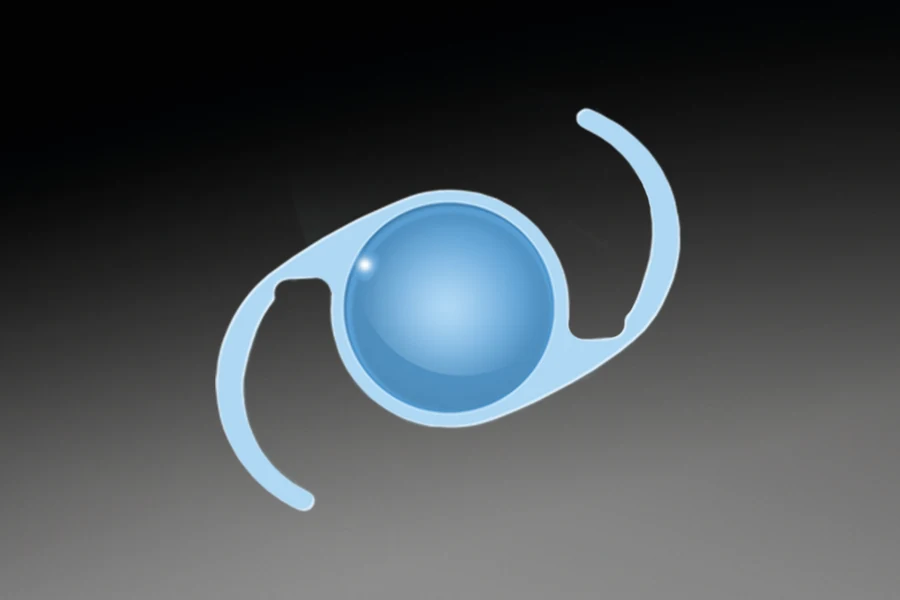
Biometry becomes particularly relevant when the practice regularly prepares patients for cataract surgery. The Eyestar 900 combines biometry, keratometry, topography, pachymetry and OCT imaging. Documentation of both corneal surfaces, pachymetry and anterior-segment OCT sections adds information to the ocular measurements used in preoperative assessment. The technical interest is the centralisation of data; the practical consequence is a more organised case review before the surgical decision, with EyeSuite integration supporting the clinical pathway.
5. Add specialist extensions according to real activity
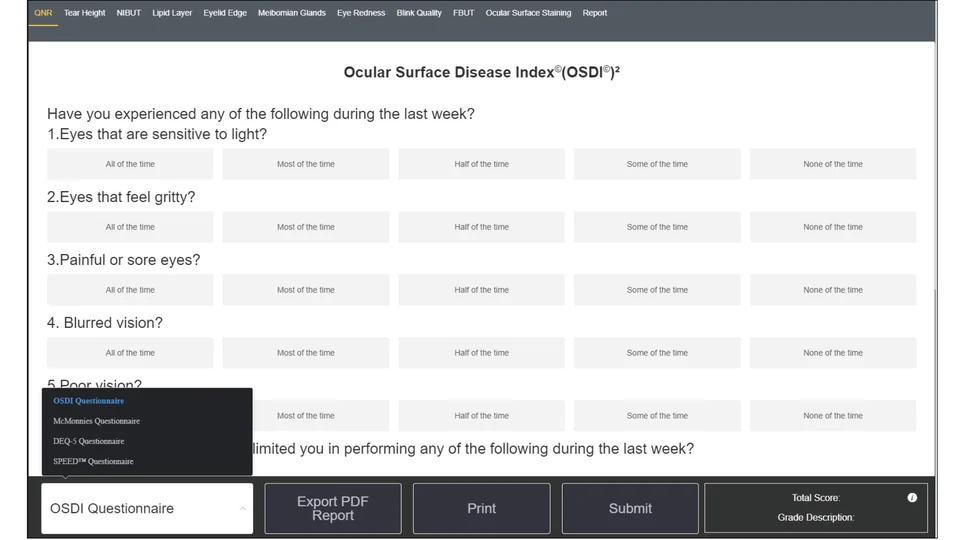
A coherent platform may then extend into specialist diagnostic areas. The S390L Firefly + D130 is intended for ocular-surface analysis and documentation of tear-film parameters. It integrates the OSDI questionnaire into the examination pathway and includes functions for documenting tear-film height and stability. The feature-to-value chain is clear: questionnaire, imaging and tear-film measurements are brought together in an organised assessment. This becomes technically and operationally relevant when dry eye and ocular-surface disease represent a regular consultation stream or materially influence visual quality and treatment planning.
The PIROP A+B+CCT provides another modular extension. Its A-Scan supports ocular measurements and intraocular-lens power calculation; the B-Scan provides ultrasound imaging of the inside of the globe; and the CCT module measures corneal thickness. Bringing these functions together on one ophthalmic ultrasound platform offers a practical complement when optical measurement or direct clinical examination needs to be supplemented. It should be sized according to the cases managed and the practice’s referral or surgical activity, not treated as a compulsory device for every consultation practice.
6. If the practice becomes a surgical centre, design a separate platform
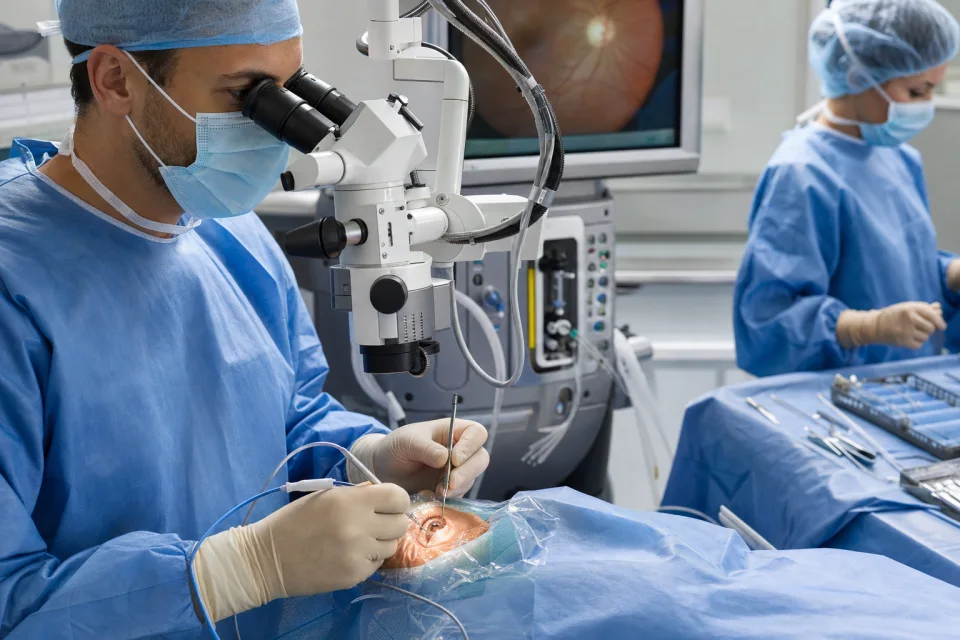
The operating theatre must be considered as a distinct architecture. Adding a phacoemulsification platform to a consultation practice does not, by itself, create a surgical service. The system, microscope, retinal visualisation, theatre layout, staff organisation and operating protocols must work together. This extension is relevant only to facilities with an appropriate surgical environment and an activity corresponding to the procedures planned.
The R-Evo Smart® CR is a compact phaco-vitrectomy platform intended for cataract, retinal and combined procedures. Its selectable peristaltic and Venturi pump architecture allows operation oriented towards flow or vacuum according to the protocol. Two independent LED light sources are documented for vitreoretinal surgery. Additional functions include fluid-air exchange, silicone-oil injection and removal, diathermy and a pars plana phaco option. A 15-inch touchscreen and programmable functions structure the user interface. The feature-to-value relationship is relevant for a surgical organisation that needs one modular platform to support several procedure families, while final selection must remain aligned with approved local configuration and intended use.
The METIS 900 combines digital 4K visualisation with ergonomics intended for the ophthalmic operating theatre. It brings the microscope, display and controls into a structured workstation. The technical interest is not only the documented resolution: the architecture brings visualisation and system control closer to the surgeon and team, supporting a more legible operating environment and a stable posture during the procedure.
For vitreoretinal surgery, the 600A / 600B provides non-contact wide-field fundus visualisation and supports the corresponding procedures. Its extended view assists observation of broader retinal areas while integration with the microscope preserves an open operative field. The R-Evo Smart® CR, METIS 900 and 600A / 600B should therefore be understood as a theatre chain: surgical fluidics and procedure management, operative microscopy, and wide-field retinal access. They belong to a separate surgical architecture, not to the minimum equipment package of a general consultation practice.
Four practical levels for planning a coherent platform
An ASEM planning framework, adapted to the project
- Essential consultation configuration: Easyvisus RM64 — 3 instruments, HRK-9000A, HDR-9000 and Elara 900 to organise consultation, refraction and direct examination.
- Advanced diagnostics: add OCTavius and Octopus 900 to cover structural exploration and functional follow-up.
- Specialist configuration: add Eyestar 900, S390L Firefly + D130 and PIROP A+B+CCT according to the practice’s cataract, ocular-surface and ultrasound requirements.
- Surgical-centre extension: integrate R-Evo Smart® CR, METIS 900 and 600A / 600B only where an appropriate operating theatre and corresponding surgical functions are in place.
Coherence also depends on deployment. Equipment selection should be accompanied by an installation study, workflow planning, staff training and after-sales support suited to the practice’s context. ASEM supports this continuity by helping transform a list of devices into an operational technical platform, with close attention to configuration, room organisation and intended use. Product availability, approved labelling and market configuration should be confirmed locally before commitment, particularly for surgical systems.
Share this article
Professional FAQ
What should be structured first in an ophthalmology practice?
The first coherent level combines a refraction unit, objective measurement, subjective refraction and a slit lamp. This creates a usable consultation pathway before specialist imaging is added.
Are OCTavius and Eyestar 900 required together?
No. Depending on configuration, the two systems may share certain imaging or measurement functions. Their combination should be based on the practice’s activity, cataract pathway, retinal imaging needs and the level of specialisation required.
Can OCT replace automated perimetry?
No. OCT primarily documents ocular structure, whereas the Octopus 900 evaluates the visual field and supports functional follow-up. They address different clinical questions and can be complementary.
When should a practice consider a surgical extension?
Only when the organisation has an appropriate operating theatre, surgical workflow and activity corresponding to the planned phaco-vitrectomy, microscopy and retinal-visualisation functions.
Sources and references
Official product
-
R-Evo Smart CR
BVI Medical · R-Evo Smart CR · www.bvimedical.com
Accessed 2026-09-21 -
Octopus 900 — source fabricant officielle
haag-streit.com
Accessed 2026-08-30 -
Eyestar 900 — source fabricant officielle
haag-streit.com
Accessed 2026-08-30 -
600A / 600B — source fabricant officielle
www.mediworks.biz
Accessed 2026-08-30 -
R-Evo Smart® CR — source fabricant officielle
www.bvimedical.com
Accessed 2026-08-30 -
METIS 900 — source fabricant officielle
us.haag-streit.com
Accessed 2026-08-30 -
Easyvisus RM64 — 3 instruments — source fabricant officielle
www.fiso.info
Accessed 2026-08-30 -
HRK-9000A — source fabricant officielle
huvitz.com
Accessed 2026-08-30 -
HDR-9000 — source fabricant officielle
huvitz.com
Accessed 2026-08-30 -
Elara 900 — source fabricant officielle
us.haag-streit.com
Accessed 2026-08-30 -
OCTavius — source fabricant officielle
huvitz.com
Accessed 2026-08-30 -
S390L Firefly + D130 — source fabricant officielle
www.mediworks.biz
Accessed 2026-08-30 -
PIROP A+B+CCT — source fabricant officielle
echoson.pl
Accessed 2026-08-30