Steroid-Induced Glaucoma: When to Consider SLT and How to Follow Up
In steroid-induced ocular hypertension or glaucoma, selective laser trabeculoplasty can contribute to pressure control when the angle and trabecular target are suitable. Patient selection and structured follow-up remain decisive.
In questo articolo
- The first triage: is the pressure rise compatible with a trabecular response?
- Why the selective principle matters to treatment architecture
- Cito 532: a platform designed to make SLT more fluid
- Organising follow-up: measure the response without overinterpreting a single time point
- When SLT should remain one element—not the centre—of the decision
Steroid-induced glaucoma requires a more precise clinical reading than a standard case of primary open-angle glaucoma. The first step is to characterise corticosteroid exposure: route of administration, duration, recent changes and whether treatment can be reduced or modified in coordination with the prescribing clinician. This causal assessment does not replace anterior-segment examination; it makes that examination more meaningful. When the angle is open and the trabecular meshwork remains accessible, SLT may contribute to intraocular pressure control. Its role nevertheless depends on target quality, degree of pigmentation, baseline pressure, established structural and functional damage, expected rate of progression and the ability to provide appropriate monitoring. The laser is therefore part of a strategy. It does not remove the corticosteroid cause or the need for prolonged surveillance.
The first triage: is the pressure rise compatible with a trabecular response?
The decision becomes more robust when three levels are assessed together. The first is causal: is corticosteroid exposure still active, has it recently intensified, or has it already been discontinued? The second is anatomical: is the angle sufficiently open to permit consistent application to the trabecular meshwork? The third is functional: what pressure reduction is required in relation to the optic disc, visual field, OCT findings where available and the patient’s individual risk? An open angle alone does not validate the indication. Trabecular pigmentation may facilitate energy absorption, but it also calls for careful titration and attention to the risk of a transient pressure spike. Conversely, a poorly visible target or unfavourable anatomy should prompt reconsideration of the procedure rather than repeated application of impacts to an inadequately controlled area.
Why the selective principle matters to treatment architecture
SLT selectively targets pigmented trabecular meshwork cells. Its principle is based on preferential absorption of laser energy by melanin, with a pulse sufficiently brief to limit thermal spread to adjacent tissues. This distinguishes SLT from an approach based on more extensive coagulation of the trabecular meshwork. The clinical parameters described for SLT include a frequency-doubled 532 nm Nd:YAG laser, a 3 ns pulse duration and a 400 μm beam diameter. The nanosecond duration is important: it is shorter than the time required for heat generated at the chromophore to spread into surrounding structures. The technical interest is therefore an action centred on the pigmented target while maintaining trabecular architecture. The practical consequence is a treatment whose tissue logic is selective rather than intrinsically destructive.
The selective mechanism should not be confused with a promise of permanent pressure normalisation. The pressure response may be incomplete, vary between eyes and diminish over time. In steroid-induced glaucoma, the trajectory also depends on changes in corticosteroid exposure and the patient’s individual susceptibility. This interaction explains why postoperative review cannot stop at documenting an initial reduction. The clinician must determine whether the reduction is sufficient for the individual pressure target, whether it is sustained and whether structural and functional findings remain stable. SLT may reduce treatment burden in selected configurations, but it must never lead to relaxed surveillance.
Cito 532: a platform designed to make SLT more fluid
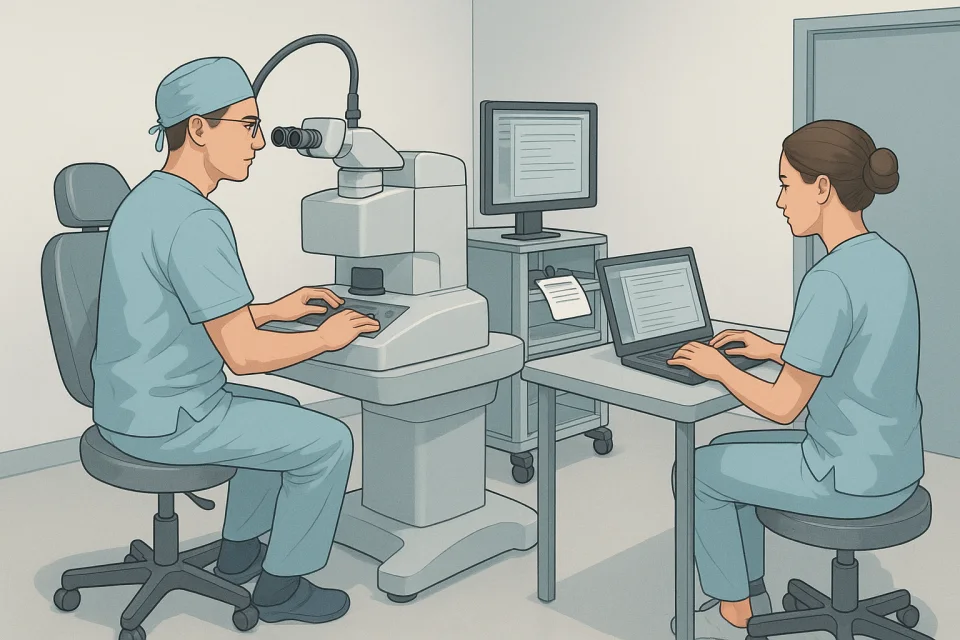
During an SLT session, treatment quality depends on visualisation, alignment, target consistency and control of the selected parameters. A laser platform should therefore be assessed not merely on whether it includes an SLT function, but on whether its architecture is coherent with the real sequence of the procedure. The Cito 532 fits this approach. Its µ-chip technology is announced with rapid pulse sequences, homogeneous spot quality and thermal stability. The value mechanism is practical: rapidly available pulses and homogeneous energy delivery support continuity of treatment; the technical interest is more consistent execution; the operational consequence is a smoother laser workflow with fewer interruptions in a methodical trabecular treatment sequence. For a service seeking to standardise its SLT pathway, this technology combination is particularly relevant.
Organising follow-up: measure the response without overinterpreting a single time point
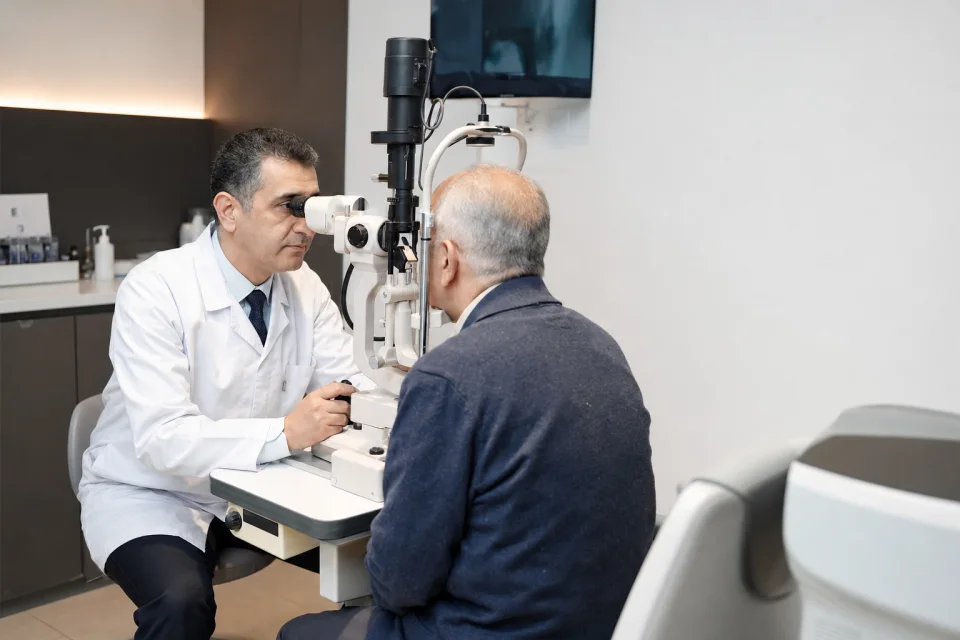
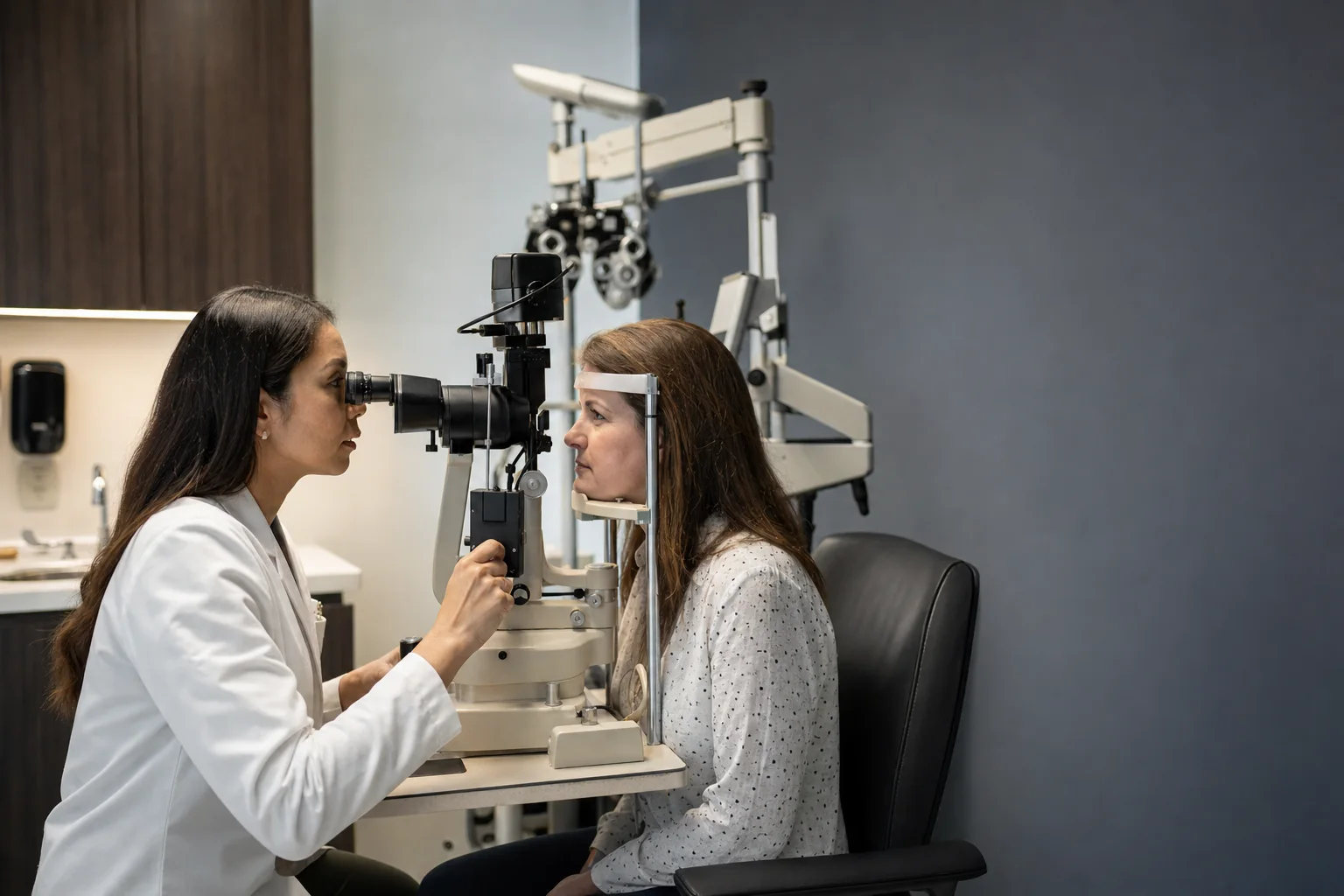
After SLT, follow-up should first look for an early pressure reaction and document tolerance. Reported adverse effects are generally mild and transient, but transient intraocular pressure spikes can occur. This possibility deserves particular attention when the angle is heavily pigmented or functional reserve is limited. The early review has two purposes: it protects the immediate post-procedure period and provides a reference point for subsequent assessment. The measurement should be interpreted alongside the clinical examination, treatment still being used and baseline pressure. An isolated value cannot establish definitive success or failure.
The SLT response should then be assessed after sufficient time has passed to distinguish an immediate fluctuation from an exploitable pressure benefit. The specialist compares pressure with previous measurements, the individual target and the trajectory of glaucomatous damage. If the patient remains on pressure-lowering therapy or corticosteroid exposure has changed, these factors must remain visible in the interpretation. In steroid-induced glaucoma, follow-up should include regular reassessment of the causal context. A reduction after corticosteroid modification, a partial laser response and a later pressure rise do not have the same meaning. The laser should be judged within the full therapeutic pathway, not as an isolated intervention.
When SLT should remain one element—not the centre—of the decision
A patient whose pressure remains high despite ongoing corticosteroid exposure, advanced glaucomatous damage or an inadequate response should not be kept in a laser-only pathway by inertia. The strategy may require adjustment of medical treatment, discussion with the corticosteroid prescriber or another option according to risk and progression. The general literature supports SLT in several forms of open-angle glaucoma, while questions remain about long-term effects and retreatment. In steroid-induced disease, this methodological reservation is important: the absence of specific evidence in the available sources prevents mechanistic plausibility from becoming a universal indication.
A practical four-stage organisation
- Document corticosteroid exposure, its evolution and the pressure-control objective.
- Confirm angle accessibility and assess trabecular target quality before selecting SLT.
- Schedule follow-up according to risk, with attention to early pressure and delayed response.
- Reassess structural and functional stability regularly, together with the need to continue, adjust or supplement the strategy.
In steroid-induced glaucoma, SLT has a place when the trabecular target is accessible, the pressure requirement is explicit and follow-up can confirm the response. Selection must remain demanding because the available data do not establish specific, uniform SLT efficacy for this aetiology. The selective principle, the 532 nm parameters classically associated with the technique and the possibility of consistent delivery provide a sound technical basis. With the Cito 532, ASEM offers a platform whose announced rapid sequences, homogeneous spot and thermal stability respond directly to the requirements of a controlled SLT workflow. The final decision remains clinical; the value of the solution then depends on procedural precision, traceable follow-up and the centre’s ability to place laser treatment within a comprehensive glaucoma strategy.
Condividi questo articolo
Domande frequenti dei professionisti
Is SLT indicated for every patient with steroid-induced glaucoma?
No. SLT should be considered case by case, according to angle openness, trabecular visibility and pigmentation, pressure level, optic nerve status and the feasibility of close follow-up. The available sources do not support claiming specific efficacy across all steroid-induced forms.
Does a high intraocular pressure favour a response to SLT?
In the general SLT literature, high pretreatment intraocular pressure is the strongest reported predictor of success. It is a decision-support factor, not a guarantee of response in a particular patient.
What should be monitored after SLT?
Follow-up should include early intraocular pressure and its subsequent evolution, clinical tolerance and, over the longer term, markers of glaucomatous progression. The schedule should be adapted to the individual risk and therapeutic context.
Fonti e riferimenti
Prodotto ufficiale
-
Cito 532
A.R.C. Laser · Cito 532 · www.arclaser.com
Consultato il 2026-11-22
Institutional Source
-
Eye care, vision impairment and blindness
A.R.C. Laser · Cito 532 · www.who.int
Consultato il 2026-08-12 -
Selective laser trabeculoplasty: current perspectives - PMC
A.R.C. Laser · Cito 532 · pmc.ncbi.nlm.nih.gov
Consultato il 2026-10-14 -
Selective laser trabeculoplasty: An updated narrative review - PMC
A.R.C. Laser · Cito 532 · pmc.ncbi.nlm.nih.gov
Consultato il 2026-10-14
Eventi correlati a questo argomento

15 ème congrès annuel de la Société Algérienne du Glaucome
Algeri, AlgeriaSociété Algérienne du Glaucome
The Algerian Glaucoma Society announces its fifteenth annual congress on 26–27 November 2026 at the Sherat...
12th World Glaucoma Congress
Kyoto, GiapponeWorld Glaucoma Association
Un appuntamento professionale di oftalmologia organizzato da World Glaucoma Association. Consultare la fon...