
HDR-9000
Digital refractor for subjective examination and measurement transfer.
The Huvitz HDR-9000 digital phoropter combines advanced technology and ergonomics. Precise measurements and intelligent functions are designed to improve consultations and diagnostic assessment while providing a comfortable patient experience.
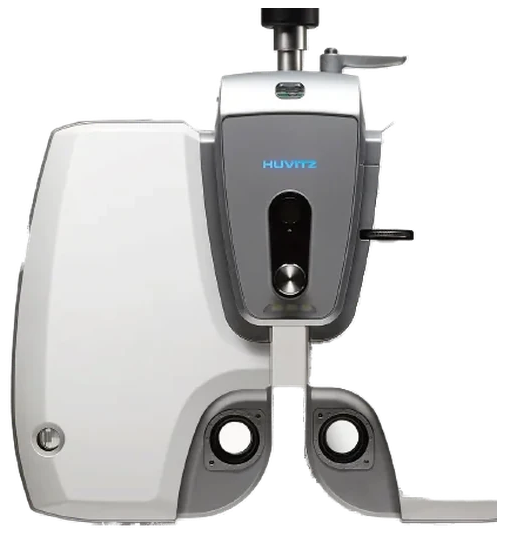
Key advantages
The documented strengths of HDR-9000, at a glance.
Subjective refraction
Sphere from −29 to +26.75 D for visual examination.
Prism correction
Prism power up to 20 Δ.
Wireless connection
Data exchange through Wi-Fi or RS-232.
Guide subjective refraction
The displayed workflow organises refraction steps and practitioner choices.
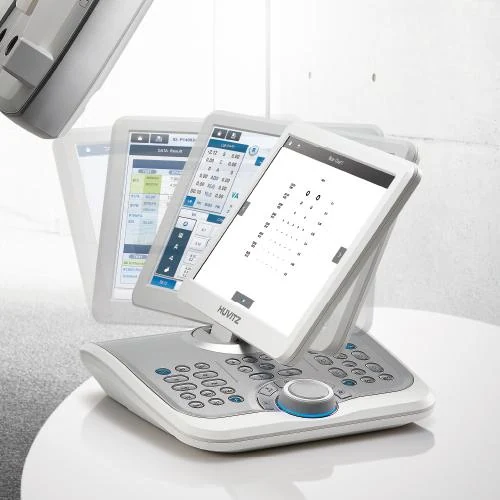
Control from one interface
Core controls are grouped to limit interruptions during the examination.
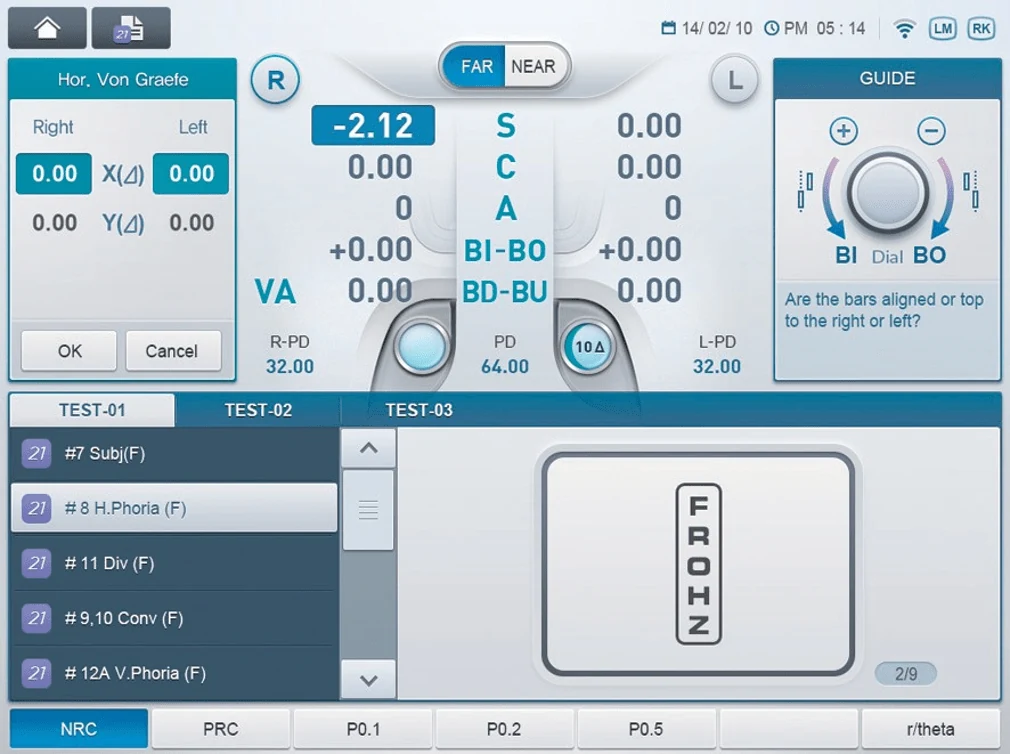
Manufacturer illustration: the configuration shown may differ from the delivered configuration.
Compare corrections
The structured presentation supports comparison of correction options with the patient.
Capabilities in practice
A closer look at the functions and technology of HDR-9000.
Refine cylinder axis and power
HDR-9000 provides Jackson and dual cross-cylinder lenses. Lens changes support subjective comparison of astigmatic axis and power.
- Jackson cross cylinder.
- Dual cross cylinder for comparison.
Designed for a smoother workflow
Structure a 21-point examination
The 21-point sequence organises refraction steps. Values are shown as charts and graphs on the control panel for review with the patient.
- Structured 21-point refraction sequence.
- Review of values on the control panel.
Manufacturer illustration: the configuration shown may differ from the delivered configuration.
Designed for daily practice
Explore the documented features and practical configuration of HDR-9000.
Adjust the near-vision posture
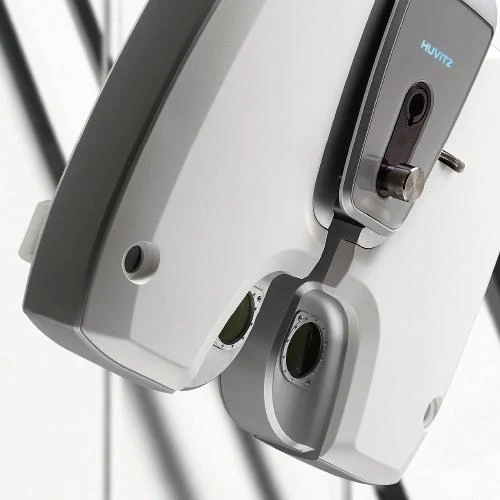
The head tilts up to 45° for near work. Monocular height adjustment of ±3 mm adapts the position of the two eye apertures.
- Head tilt up to 45° for near work.
- Monocular height adjustment of ±3 mm.
Retrieve refraction-station data
Wireless communication brings together results from compatible Huvitz devices to prepare subjective examination.
Depending on configuration
- Documented exchange with the auto ref-keratometer.
- Communication with the HLM-9000 lensmeter.
More product details
HDR-9000: A new era in ophthalmic diagnostics
The Huvitz HDR-9000 digital phoropter combines advanced technology and ergonomics. Precise measurements and intelligent functions are designed to improve consultations and diagnostic assessment while providing a comfortable patient experience.
Main features
1. Advanced digital technology: Smooth transitions between different visual correction options support quick, precise results. 2. Large, intuitive touchscreen: A high-resolution screen facilitates navigation and parameter control for an efficient diagnostic process. 3. Connectivity and compatibility: Integration with Huvitz refractometers and other instruments simplifies data management and synchronisation. 4. Automated, customisable settings: The HDR-9000 adjusts parameters automatically while retaining flexibility for individual patient requirements. 5. Greater patient comfort: Ergonomic design and smooth operation reduce discomfort during prolonged testing.
Key technical specifications
Vision tested: distance, near and intermediate vision. Progressive lens compatibility: yes, with optimised transitions. Test modes: includes acuity, binocular vision and advanced refraction tests. Connectivity: compatible with EMR systems and Huvitz instruments.
Benefits for professionals
Efficient consultations: automation and a fast, responsive interface save time. Improved diagnostic assessment: more reliable, reproducible results support precise patient monitoring. Enhanced patient experience: less visual fatigue and greater comfort during tests contribute to overall satisfaction.
HDR-9000: Everyday technology for your practice
Take your practice further with the HDR-9000. This innovative digital phoropter offers performance designed to meet practitioners' and patients' expectations.
Technical information
Technical specifications & documentation
Product information, specifications and available documentation in one place.
Product specifications overview
Key documented information for this exact model.
- Brand
- Huvitz
- Model
- HDR-9000
- Technology
- Refractor / auto-refractor
- Clinical use
- Diagnostics and biometry
Technical specifications
- Minimum sphere
- -29 DStandard examination; reduced range during XC / prism tests.
- Maximum sphere
- 26.75 DStandard examination.
- Maximum cylinder
- 8.75 D
- Maximum prism
- 20 Δ
- Connectivity
- Wi-Fi · RS-232
- Adjustment ranges
- Tilt 45°; monocular height ±3 mm
- Power supply
- 100–240 V AC ; 50–60 Hz
- Dimensions
- 329 × 103 × 296 mmRefractor head only; panel and control box excluded.
- Weight
- 4.2 kgRefractor head only.
Standard examination; reduced range during XC / prism tests.
Standard examination.
Refractor head only; panel and control box excluded.
Refractor head only.
Downloads & resources
Available product sheets and public manufacturer resources.
No public manufacturer document has been verified for this model. Contact ASEM for the available documentation.
Sources and documentation
- https://huvitz.com/wp-content/uploads/2024/09/HDR-9000_8p_eng_20180330.pdfVerified on 2026-10-05
- https://huvitz.com/ko/product/hdr-9000/Verified on 2026-10-05
- https://huvitz.com/en/product/hdr-9000/Verified on 2026-08-30
- https://huvitz.com/ko/product/hdr-9000/Verified on 2026-10-18
Frequently asked questions
Your questions about HDR-9000
Clear answers based on the available product information.

What is the documented Minimum sphere of HDR-9000?
-29 D — Standard examination; reduced range during XC / prism tests.
View sourceWhat is the documented Maximum sphere of HDR-9000?
26.75 D — Standard examination.
View sourceWhich configuration should I confirm for HDR-9000?
Standard examination; reduced range during XC / prism tests.
View sourceWhich devices are named for Wi-Fi transfer?
The manufacturer names data exchange with its auto ref-keratometer and HLM-9000. The devices and practice-network integration need to be specified in the configuration.
View sourceHow does the head adapt to near examination?
It tilts up to 45°. Monocular height adjustment of ±3 mm also aligns the apertures with the eyes.
View sourceWhat is the 21-point presentation used for?
It organises the refraction sequence and presents values in charts and graphs on the control panel for review during examination.
View sourceASEM support
More than a device, a long-term partnership
Discuss your project with ASEM: equipment selection, installation, training and technical support.
Installation
Discuss the installation requirements and configuration with our technical team.
Learn more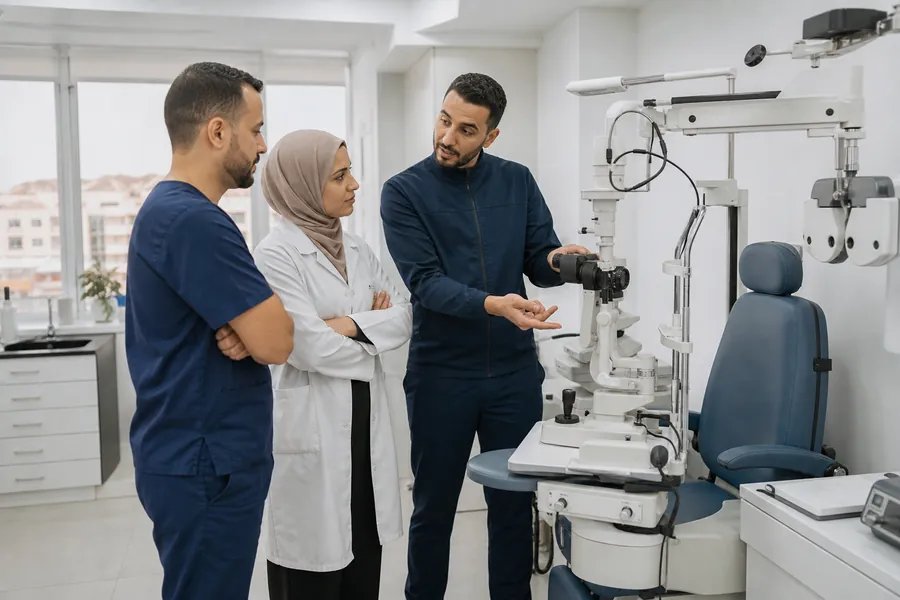

After-sales service
Contact ASEM for technical assistance and the support appropriate to your equipment.
Learn more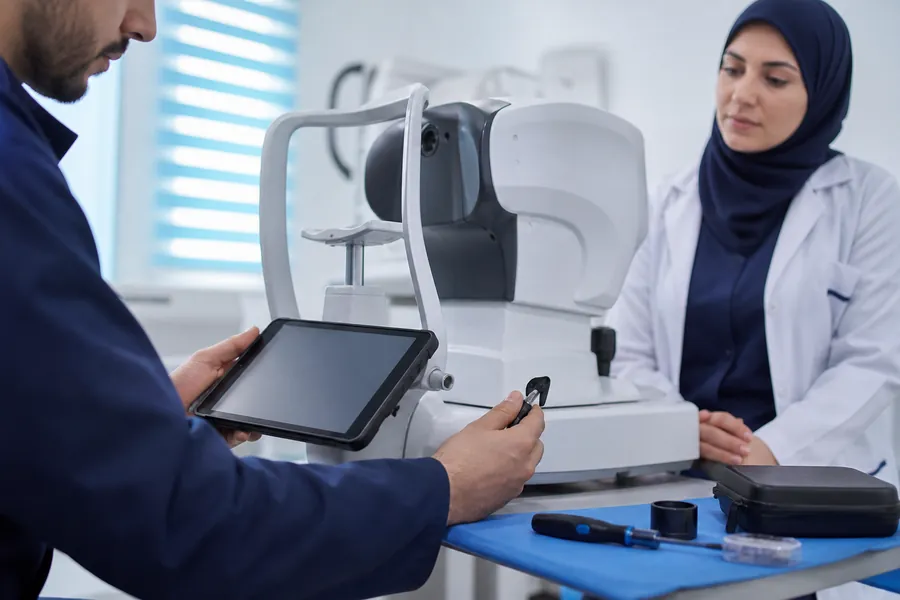

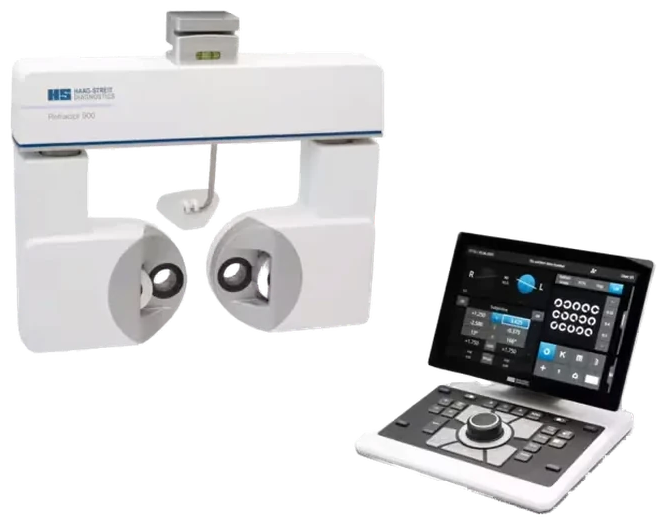
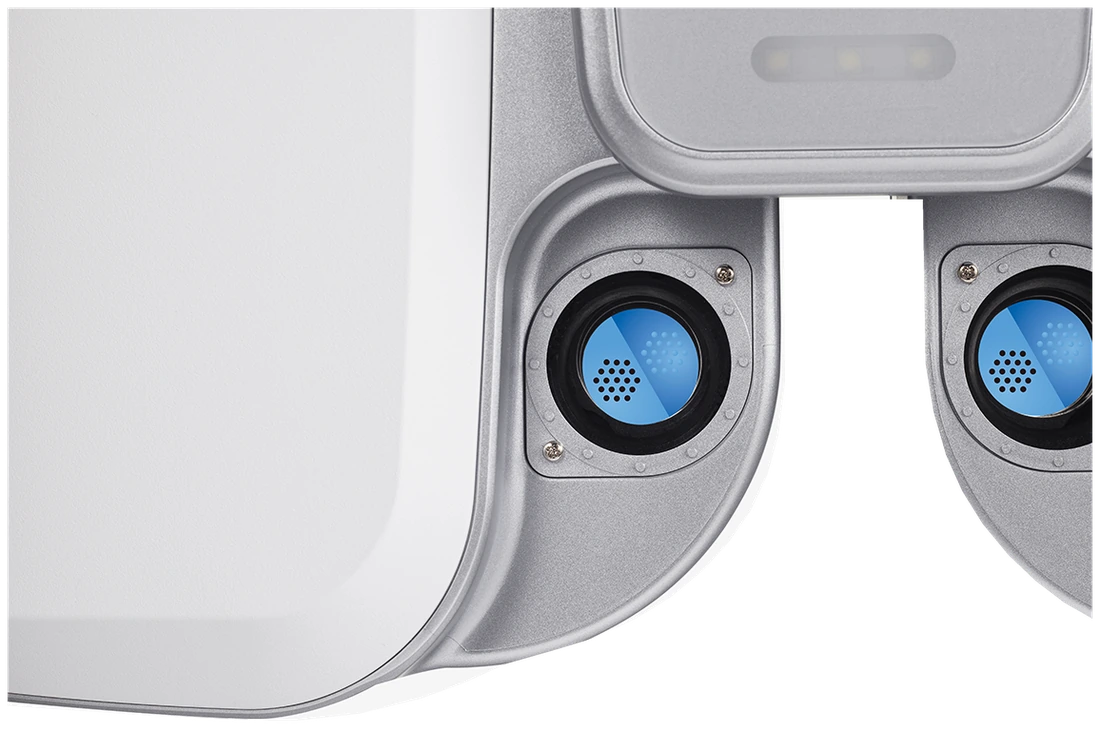
Related products
Explore equipment with related technologies and clinical uses.
Clinical applications
Explore the ASEM clinical catalogue
Browse related areas of the ASEM catalogue. These links do not extend the indications of this device.
Explore all products