Reducing Downtime in Combined Phaco-Vitrectomy Surgery
In combined surgery, performance depends on more than the quality of each surgical step. Fluidic control, illumination, console continuity, consumable preparation and team coordination all shape the transition between the anterior and posterior segments.
In this article
- 1. Prepare the procedure before the patient enters the room
- 2. Match aspiration to the surgical phase
- 3. Keep controls available as the case becomes more complex
- 4. Prepare the posterior segment without an illumination break
- 5. Preserve disciplined phacoemulsification in a mixed procedure
- 6. Build a reproducible transition protocol
- An integrated platform for a more predictable operating-room organisation
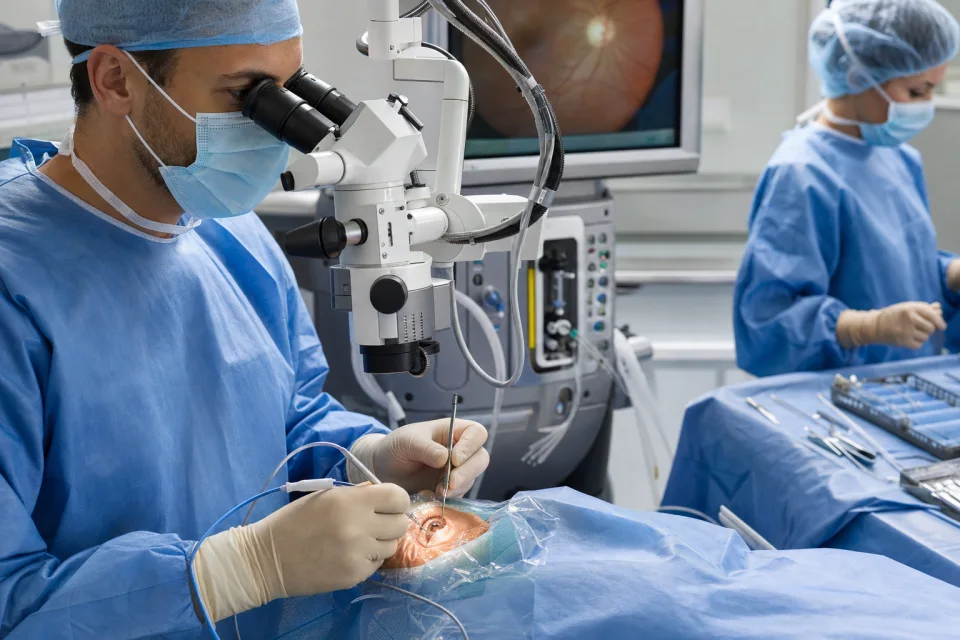
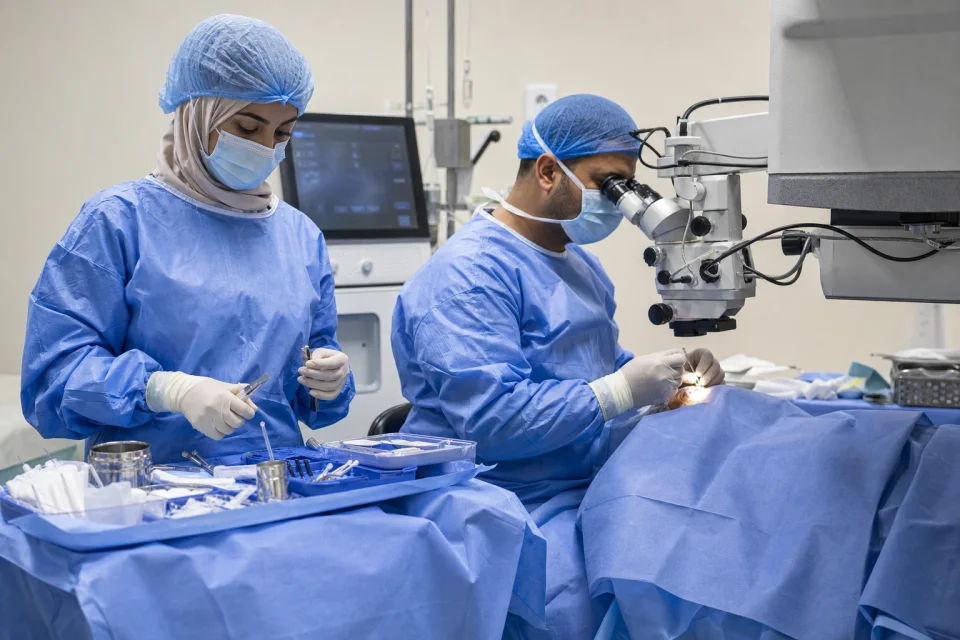
Combined phaco-vitrectomy is not simply two procedures placed next to one another. It is a sequence of phases whose technical priorities change quickly. Anterior-segment preparation, phacoemulsification control, the vitreoretinal strategy, illumination and any fluid-air exchange must follow one another without creating uncertainty. Every interruption can trigger a new series of checks: which circuit is active, which aspiration principle is selected, which function is assigned to the foot pedal, which instrument should be ready and what infusion configuration is expected? These checks are clinically and operationally important, but an avoidable reconfiguration can turn them into downtime.
Workflow is therefore not reducible to the speed of an individual manoeuvre. It depends on alignment between the surgical plan, the console architecture and operating-room preparation. A well-designed transition preserves command visibility, fluidic continuity and immediate access to the required instruments. It also allows the scrub nurse and assistant to anticipate the next phase rather than discover its requirements at the moment of change. This systems approach helps reduce downtime without confusing efficiency with haste.
1. Prepare the procedure before the patient enters the room
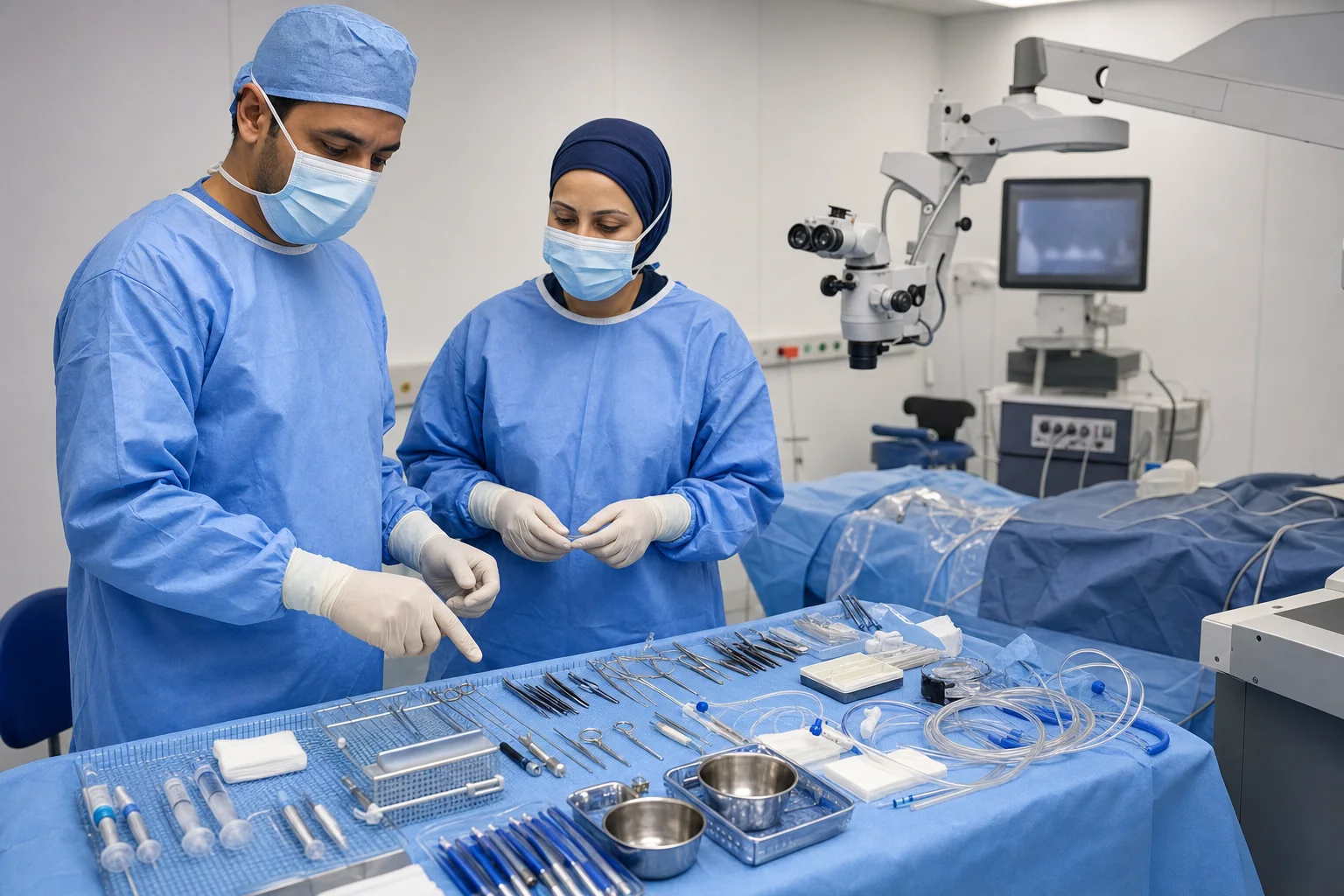
The first period of downtime often appears before incision: consumables are not grouped, a specific instrument is missing from the field, the cassette differs from the one anticipated or the sequence of console commands has not been communicated clearly enough. A combined procedure requires more precise preparation than an intervention centred on one segment. The team should identify the planned stages, their associated accessories and any anticipated conversion options, then translate that strategy into the physical layout of the room.
2. Match aspiration to the surgical phase
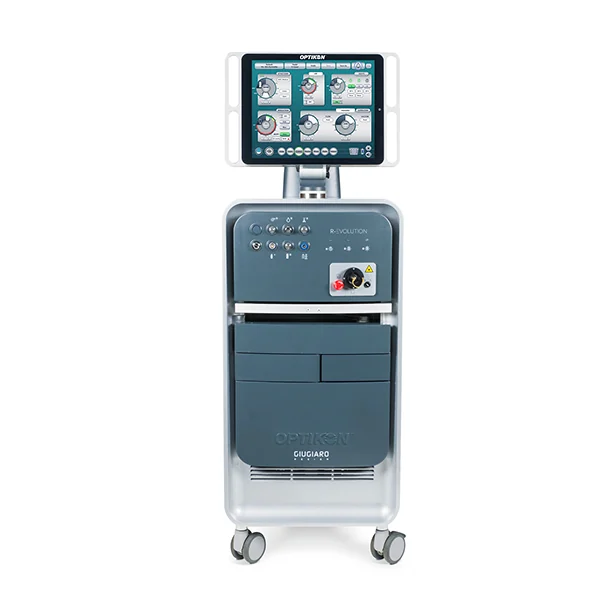
Phacoemulsification and vitrectomy do not place identical demands on fluidics. A platform limited to one aspiration philosophy may force the team to adapt the surgical technique to the console’s capabilities. The R-Evolution CR combines a peristaltic pump with a Venturi pump. The first follows a flow-based logic; the second follows a vacuum-based logic. This dual architecture allows aspiration based on flow or vacuum to be selected according to the surgical phase and the surgeon’s strategy.
The mechanism has a direct operational implication. As the procedure moves from lens management to vitreous management, the console retains a coherent fluidic foundation while offering a choice of aspiration principle. The technical interest is that the transition does not have to be treated as a complete restart. The practical consequence is less dependence on equipment changes or improvised adaptations. The value lies in combining versatility with readability: the team can prepare the next phase while maintaining control of the current one.
A technically controlled transition must remain intelligible to the surgeon and the scrub nurse. Cassette, circuit or mode changes should not become opaque events. Dynamic intraocular pressure compensation provides a cross-segment operating framework; it does not replace surgical planning or clinical monitoring, but it reinforces the consistency of the fluidic environment. For a room seeking to standardise combined sequences without rigidly constraining the surgeon’s practice, this is an important platform characteristic.
3. Keep controls available as the case becomes more complex
In a combined procedure, foot control contributes directly to continuity of the surgical manoeuvre. An unclear interface or poorly anticipated assignment can create repeated micro-interruptions: the surgeon diverts attention, the team waits for confirmation and the sequence resumes only after a moment of recalibration. The R-Evolution CR provides a user interface intended to facilitate human–machine interaction and a wireless pedal. The operating principle is straightforward: bring relevant functions closer to the surgical logic and reduce reliance on peripheral manipulation.
An immediate interface is not simply a comfort feature. It supports communication of the operative rhythm: the surgeon retains a consistent control method, the assistant can identify the active phase more quickly and the scrub nurse knows which change to prepare. A wireless pedal also supports flexible placement of the console within the operating-room space, subject to local verification and maintenance procedures. The most useful solution is therefore not necessarily the one with the greatest number of functions, but the one that makes those functions predictable in use.
4. Prepare the posterior segment without an illumination break
The mechanism is a distributed illumination architecture: independent outputs allow vitreoretinal illumination needs to be prepared without conflating different uses. The technical interest becomes clear when visualisation requirements change or several illumination elements are involved. In practice, the team can anticipate the configuration, avoiding a last-minute search for an accessory or an unplanned exchange during the move to the posterior segment. The value is organisational as well as clinical: illumination becomes a prepared component of the workflow.
The platform also provides automatic fluid-air exchange and fluid-air exchange through the pedal. It supports silicone oil injection, including with simultaneous suction, and oil removal through the same kit. These functions should not be viewed as an isolated checklist. Their value emerges when the room prepares the posterior sequence with roles, circuits and controls identified before the intervention.
5. Preserve disciplined phacoemulsification in a mixed procedure
This feature becomes relevant to workflow when it helps reduce the need for repeated strategic adjustments during the phacoemulsification step. The emission-management mechanism is designed to maintain programmed tip behaviour in response to variations in resistance. The technical interest is a more readable phaco logic, while the available protocols give the surgeon emission modes aligned with their chosen approach. The practical consequence is a transition prepared by a methodical anterior phase, rather than by a phaco step marked by successive corrections. The combination is valuable because it links energy control, fluidics and sequence planning.
6. Build a reproducible transition protocol
Points to lock down in the operating-room briefing
- Identify the planned phases before surgery: phacoemulsification, vitrectomy and any anticipated exchange or injection sequences.
- Prepare consumables and accessories in order of use, with a documented solution for expected options.
- Define who confirms the move from the anterior to the posterior segment and who activates or prepares each function.
- Verify the aspiration logic selected for each phase and the correspondence between settings, circuit and pedal.
- Prepare posterior illumination before the transition, taking account of the required output and accessory.
- Conduct a short debrief after the case: waiting time, unnecessary handling, unclear control or late accessory.
An integrated platform for a more predictable operating-room organisation
The benefit of a combined platform is not measured by the number of options displayed on a console. It is built through the interaction of pumps, pressure compensation, illumination sources, fluidic exchange functions, interface, pedal and consumable preparation. When these elements are considered as one system, the team can move between phases with less reconfiguration and greater visibility of the next action. That is the difference between technical versatility and operational integration.
The R-Evolution CR brings together phacoemulsification and vitrectomy functions, a dual peristaltic and Venturi pump architecture, dynamic intraocular pressure compensation, three independent LED sources and functions dedicated to fluid-air exchange and vitreoretinal surgery. This coherence makes it particularly relevant for teams seeking to structure combined activity around one technical environment. The configuration of accessories, consumables and available offerings must, of course, be validated with the distributor according to the market and the facility’s protocol. Not all products or offerings are approved or offered in every market, and approved labelling and instructions may vary by country.
Share this article
Professional FAQ
Why are transitions critical in combined phaco-vitrectomy surgery?
They require the team to move from an anterior-segment surgical logic to a vitreoretinal one, with different requirements for aspiration, illumination, fluid exchange, instruments and controls. An integrated organisation limits unnecessary reconfiguration.
What is the value of a dedicated phaco-vitrectomy platform?
It brings together the functions required for cataract, vitreoretinal and combined procedures within one architecture. The team can therefore prepare the sequence around a coherent console and control logic.
Do peristaltic and Venturi pumps address the same requirement?
They use two distinct aspiration principles. The R-Evolution CR combines both and allows aspiration based on flow or vacuum to be selected according to the surgical phase and the surgeon’s approach.
How can an operating room prepare a more reliable combined workflow?
Standardise the consumables, instrument order, transition settings, illumination and responsibilities of each team member in advance. The platform should support this protocol without creating multiple configuration changes.
Sources and references
Official product
-
R-Evolution CR
BVI Medical · R-Evolution CR · www.bvimedical.com
Accessed 2026-08-16
Institutional Source
-
Blindness and vision impairment
BVI Medical · R-Evolution CR · www.who.int
Accessed 2026-08-09 -
Summary of recommendations for quality of care in cataract surgery management
BVI Medical · R-Evolution CR · www.who.int
Accessed 2026-08-09
Official catalogue
-
BVI Medical product catalogues
BVI Medical · www.bvimedical.com
Accessed 2026-08-16 -
BVI ophthalmic consumables
BVI Medical · www.bvimedical.com
Accessed 2026-08-16
Events related to this topic

Euretina Innovation Spotlight (EIS)
Vienne, AustriaEURETINA
A professional ophthalmology event organised by EURETINA. Please consult the official source for the lates...
26th Euretina Congress
Vienne, AustriaEURETINA
A professional ophthalmology event organised by EURETINA. Please consult the official source for the lates...
Vision to Venture Weekend 1
Budapest, HungaryEuropean Society of Cataract and Refractive Surgeons
A professional ophthalmology event organised by European Society of Cataract and Refractive Surgeons. Plea...